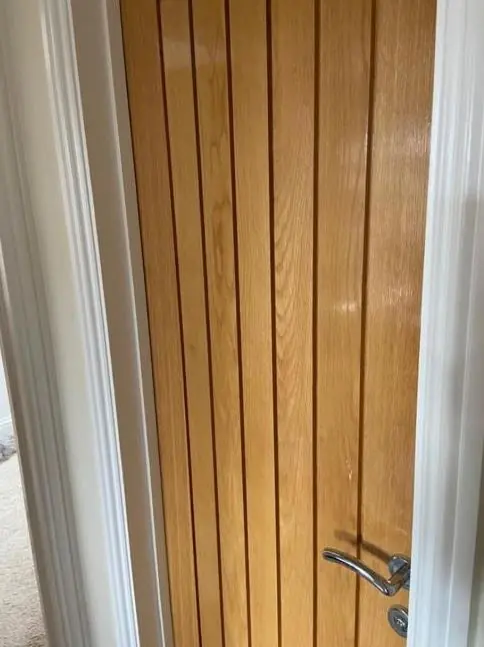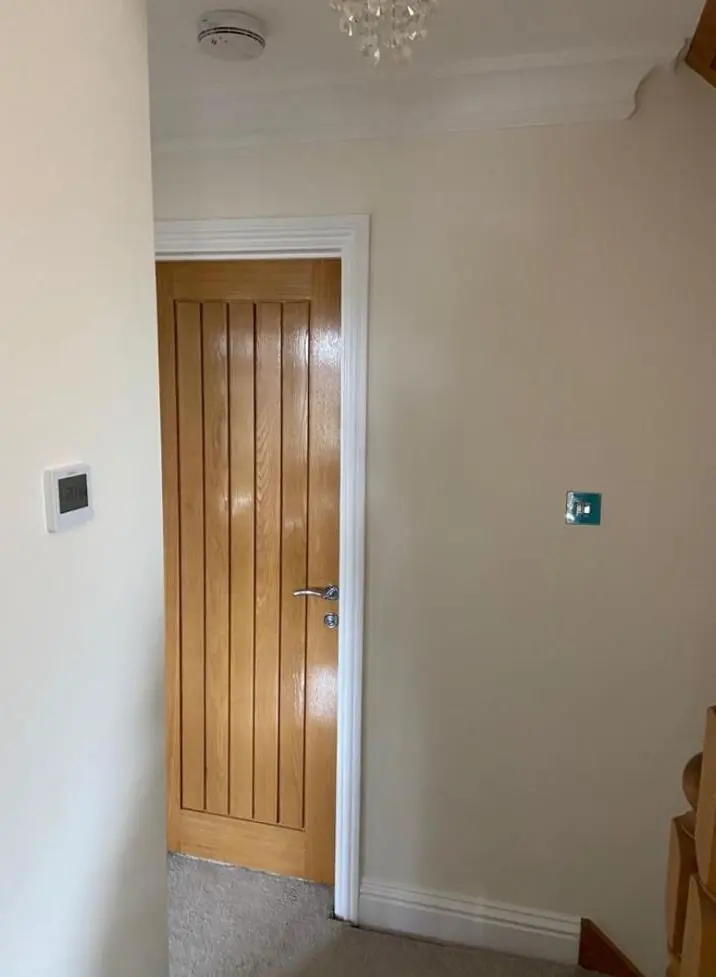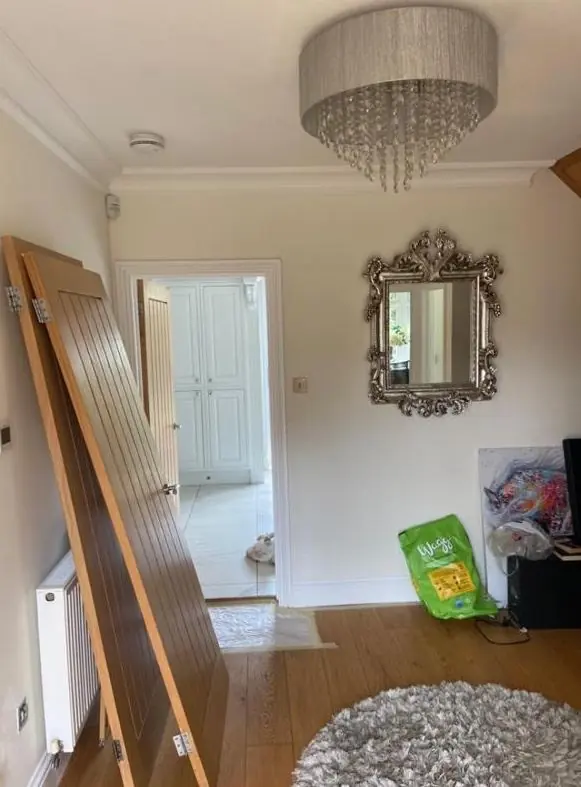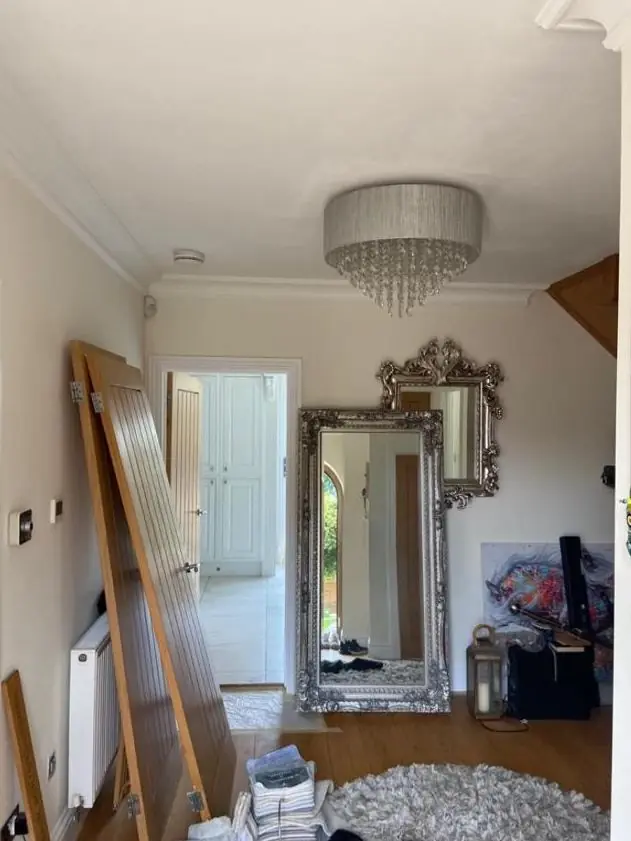
DH Painter & Decorator paints doors, skirtings, architraves and other woodwork in Yardley Gobion, about 9.7 miles south of Northampton town centre. Dean prepares the older joinery in the conservation area by hand and uses oil-based or traditional finishes, and treats the post-war estate homes to the south as straightforward modern woodwork.
Plank doors, panelled doors and everything in between
The woodwork in Yardley Gobion follows the age of the house. The 17th and 18th-century cottages along Moorend Road, at Nos 17 and 19 High Street and at Nos 3 and 4 Mount Pleasant were built with vernacular plank doors, timber side-hung casements and timber lintels. The formal 18th-century houses, such as Prospect House at 28 High Street, Manor Farm and The White House on Chestnut Road, have raised and fielded panelled doors, fanlights and timber door surrounds with pilasters and friezes. South of the village, the post-war estate has standard modern doors, frames and skirtings.
These three groups need three different approaches, so we look at the joinery before giving a price or a timescale.
Ledged boards and end grain on the cottages
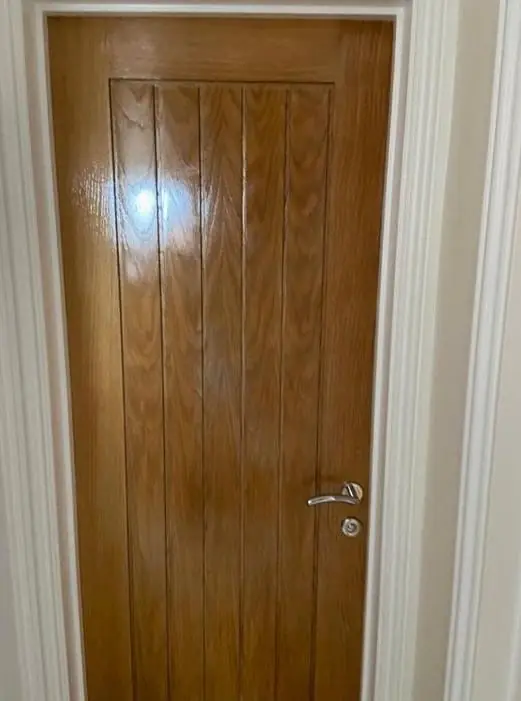
A plank door is made of vertical boards held by ledges, and every joint between the boards is a place where water can sit. On the older cottages these doors, together with the timber lintels above the casements, have exposed end grain. End grain soaks up moisture far faster than face grain, so it gets a thinned first coat of primer and a second priming coat before any undercoat goes on.
Old cottage doors usually carry many layers of paint, and some of the lower layers may be lead-based. Dean tests suspect paint before any sanding, and where it is present he uses wet abrading or chemical strippers rather than dry power sanding. Gaps between the boards are left free to move. Filling them with hard filler only cracks the paint again within a season.
Fanlights, pilasters and the Prospect House shell hood
The panelled doors and doorcases on the formal houses are fine joinery. The rococo shell hood over the door at Prospect House, dated 1757, is the most prominent example in the village, and the timber surrounds with pilasters and friezes on other formal houses in the village come from the same tradition. Mouldings like these lose their crispness quickly if they are sanded hard, so preparation is by hand. Dean scrapes back loose paint, rubs down with fine abrasives and keeps filler only where there is real damage.
Fanlights call for careful cutting-in on narrow glazing bars. Prospect House is one of more than twelve listed buildings in the village, so if you want to change the colour of a front door or doorcase on one of them, check with West Northamptonshire Council first, because listed building consent may be needed. More detail on how we work on doors and frames is on our door, skirting and woodwork painting page.
Why keeping the old joinery matters here
The 2013 conservation area appraisal worries most about small alterations to unlisted houses adding up over time, and it names timber doors swapped for uPVC or other modern units among them. It also proposes reviewing the village’s Article 4 Directions so that significant buildings keep their traditional doors and windows. The cheapest way to keep a timber door in service is to repaint it before the paint film fails. Once water gets behind the paint, boards swell, joints open and rot starts at the bottom rail.
The village’s position matters as well. Because the village is perched above the Tove Valley, a front door facing north or east, out over the valley, gets more weather than one on a sheltered side. Those doors usually need recoating sooner, and we plan exterior joinery work for settled weather.
Skirtings and internal doors in the estate houses
The 1950s to 1970s houses south of the village are a quicker job. They have machined softwood skirtings, flush or moulded internal doors and plain architraves, often painted in gloss that has yellowed over the years. A key sand, degrease and a water-based undercoat and satin or eggshell top coat usually give a hard-wearing finish that stays white. There are no conservation-area constraints on these houses, so the colour choice is yours.
- Cottages: hand preparation, extra priming on end grain, oil-based or traditional finishes.
- Formal houses: careful work on mouldings and fanlights, with a consent check for listed buildings.
- Estate homes: modern water-based systems, normally done room by room.
Read more about the village’s buildings on our Yardley Gobion area page, and for an idea of what affects the price, see the painter and decorator cost guide.
Last updated by Dean, DH Painter & Decorator.