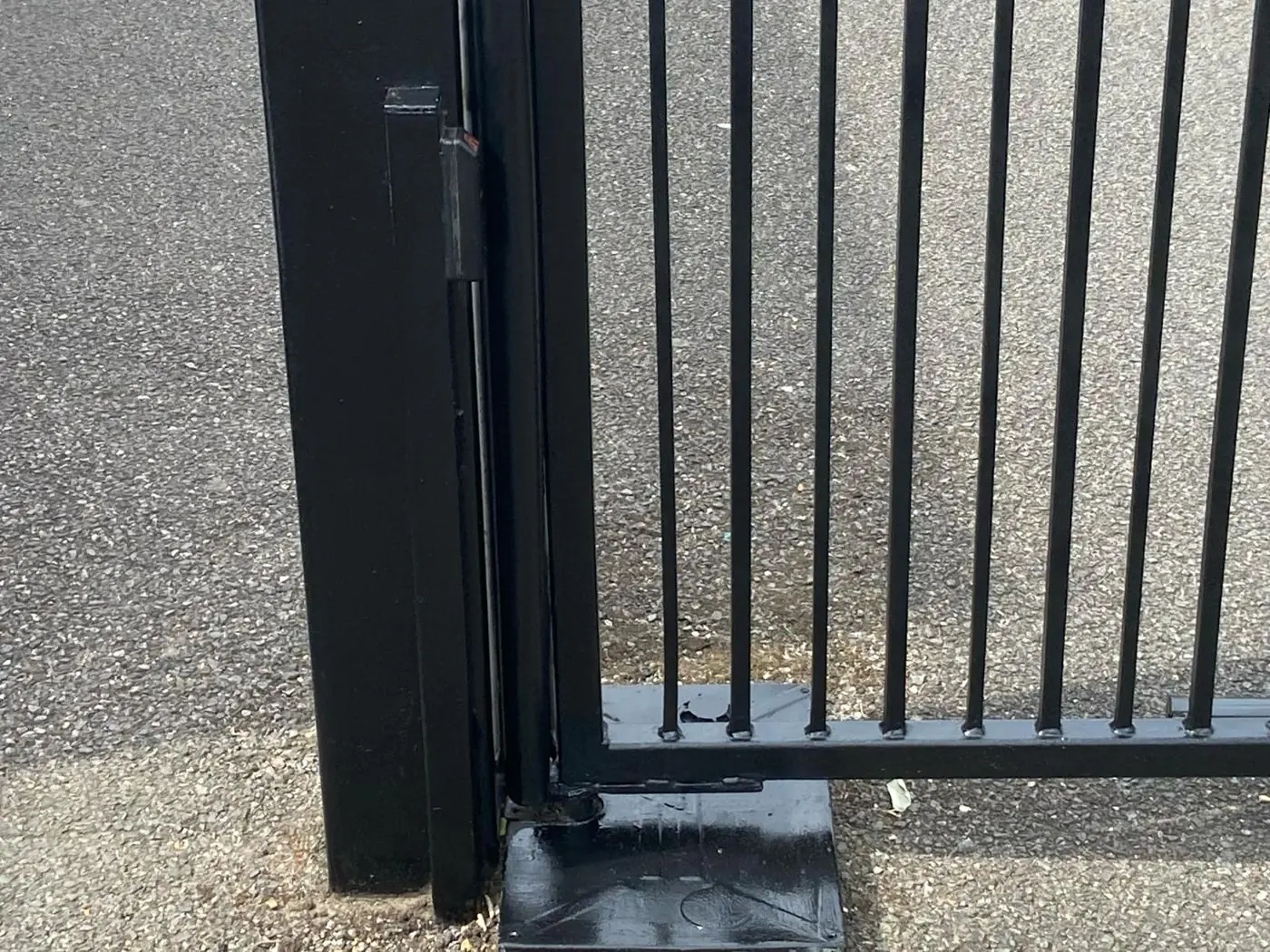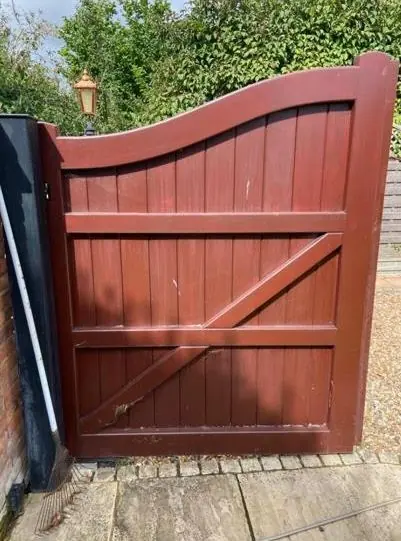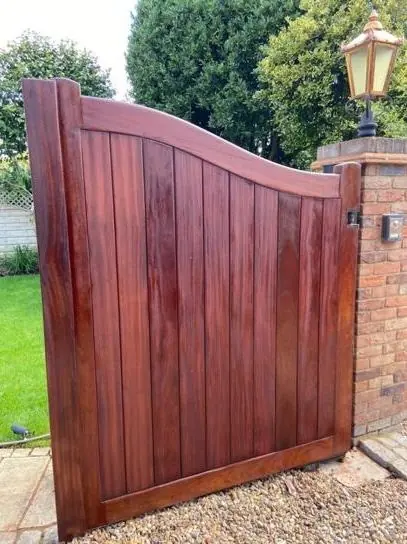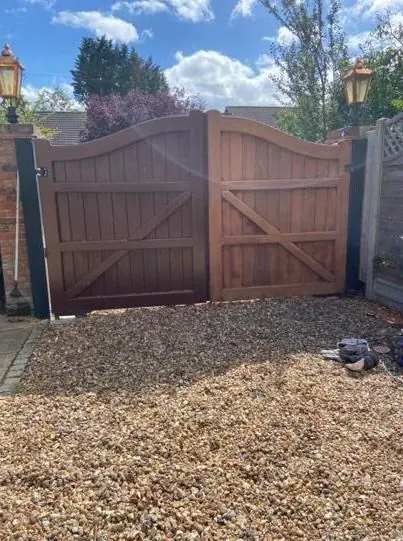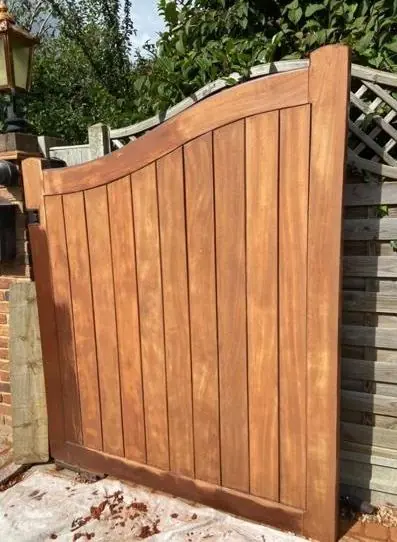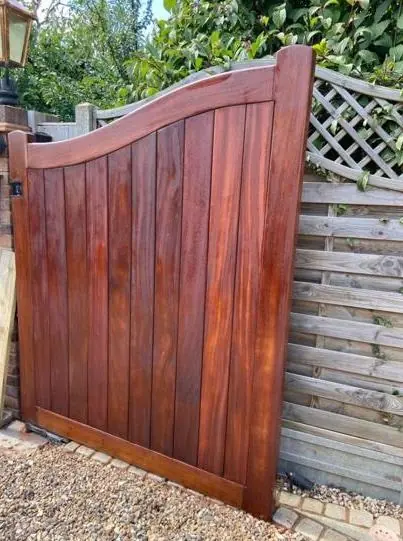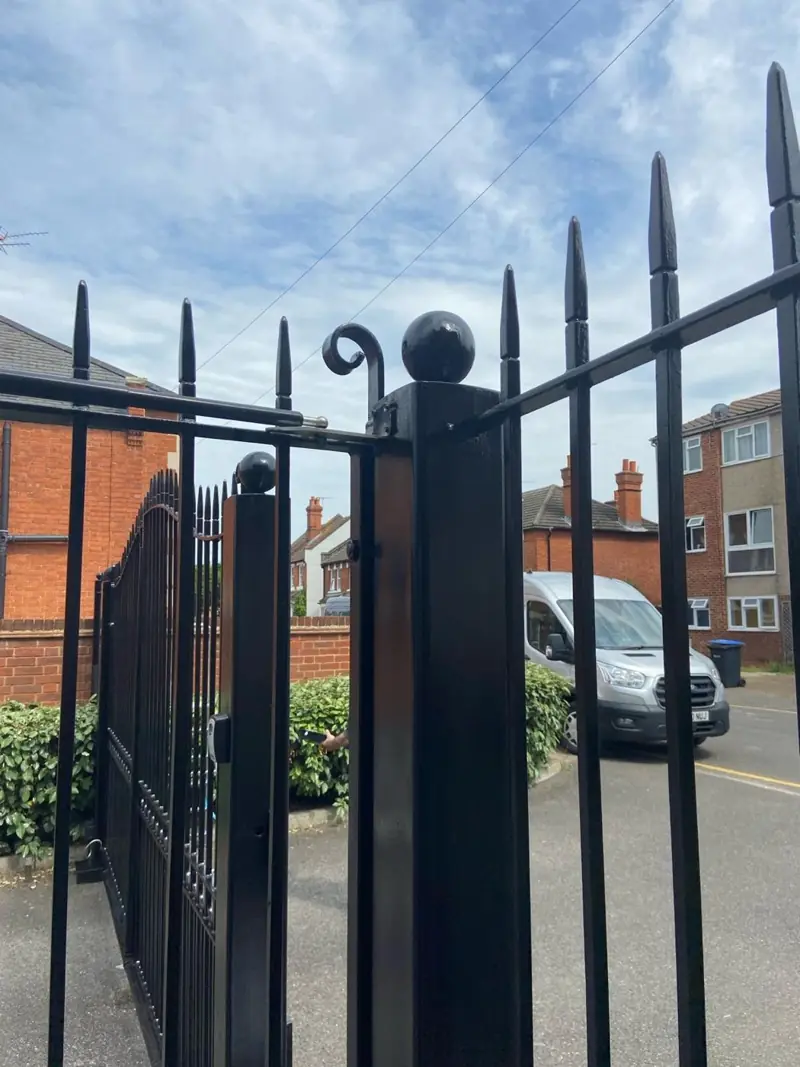
We stain and paint garden fences and timber gates in Bugbrooke, NN7, around 5.1 miles west of Northampton town centre. The village slopes towards the Nene floodplain and the Hoarestone Brook, so garden timber here stays wet longer and needs a regular staining cycle.
Damp ground between the ridge and the river
Bugbrooke sits on a ridge, but plenty of its gardens run downhill towards the Hoarestone Brook and the Nene valley to the north. The canal and the railway run along the south-west side of the parish. Low gardens in a river valley collect morning mist and hold rainwater in the soil, and fence posts and gravel boards sit in that wet ground all year. Grey, furry timber and green growth along the bottom of panels are the usual signs.
For fences in these conditions, the preparation matters more than the product:
- Algae and moss are treated and brushed off, then the timber is left to dry fully.
- Gravel boards and the base of posts get extra coats, because that is where rot starts.
- Soil and leaf litter banked against panels is cleared back before staining.
- Work is booked for a dry spell, as stain will not soak into damp wood.
Our main fence and gate staining page covers the products and methods in full. For timing, see our guide to when to book exterior painting.
Timber gates set into old stone walls
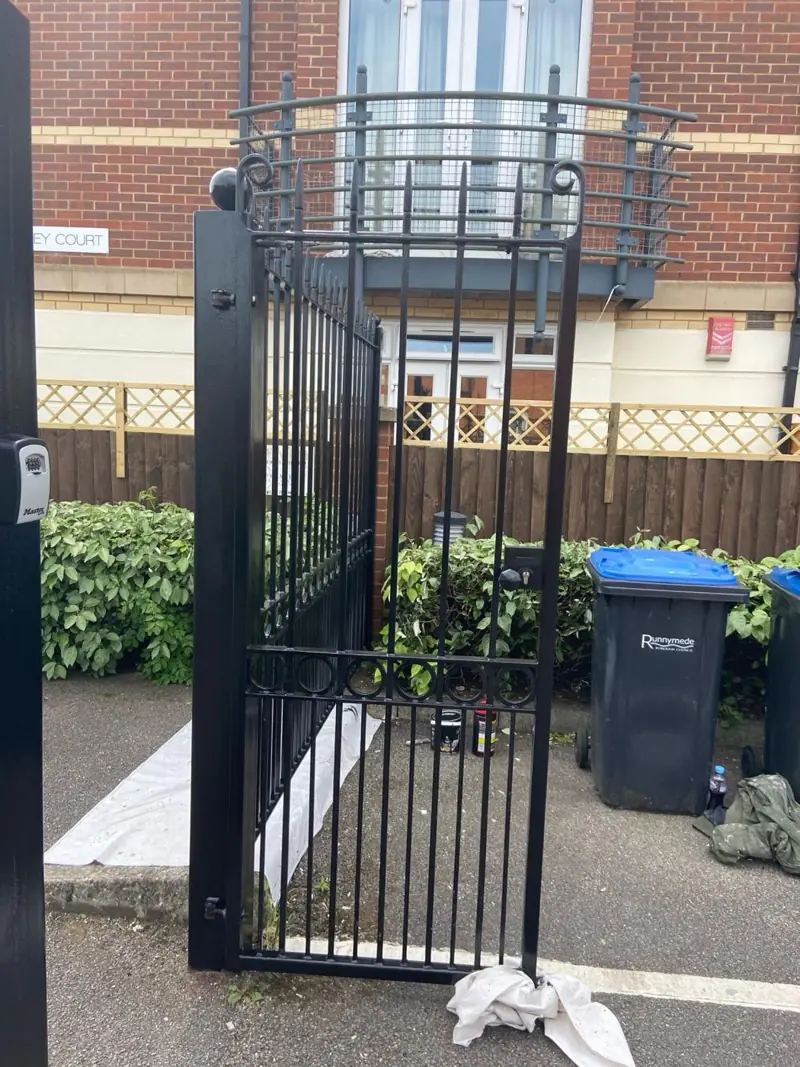
Historic England records list stone boundary walls along High Street and West End and through lanes such as Ace Lane, Church Lane, Great Lane and Pilgrims Lane. Where a timber gate hangs in one of these walls, staining it means working right up to ironstone or limestone that should stay clean and unpainted. We mask or cut in by brush along the stone, and we protect the coping and the ground below, since stain on porous stone is very hard to remove.
Gates in the conservation area are also part of the street scene. A mid-brown or muted green tends to sit comfortably against ironstone, while a bright, orange-toned stain can look out of place. If your house is listed, keep to the existing colour or check with the council before changing it. Our Bugbrooke area page describes the conservation area in more detail.
Shade from trees you cannot cut back
Trees in the conservation area are protected, so a fence in the shade of a mature tree usually stays that way. Shaded timber dries slowly and grows algae quickly. On those runs we recommend a stain with good mould resistance and a shorter gap between coats, and we keep ladders and tools clear of roots and branches while we work.
Stain or paint for a Bugbrooke garden?
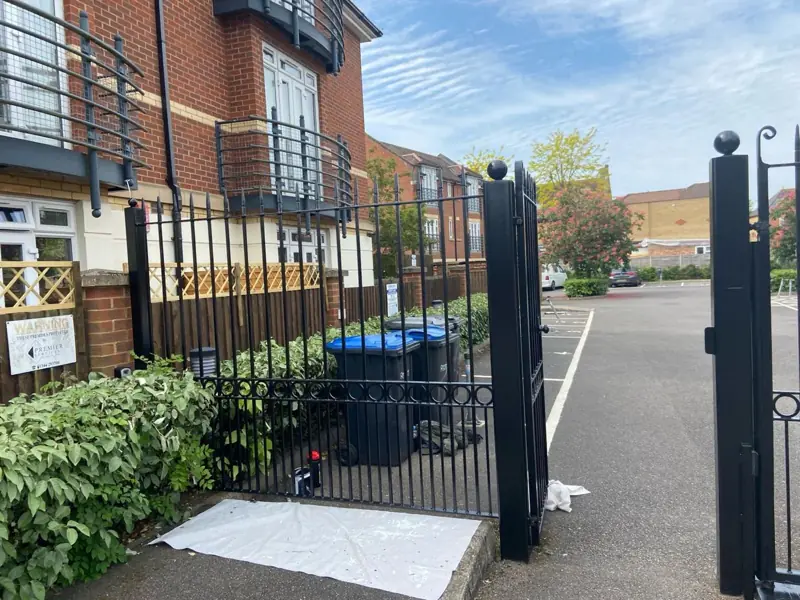
For damp, shaded fences a penetrating stain is usually the safer choice, because it wears away gradually instead of peeling when moisture gets behind it. An opaque fence paint can work on a sunny, well-drained run, and it hides weathered timber well. Smooth hardwood gates are better suited to a quality exterior wood oil or a microporous woodstain. Once we have seen the fence and how much sun it gets, we will recommend one finish and explain why.
Bugbrooke is about 5.1 miles west of our Northampton base, so we can come and look at the fence, and how much of the day it sits in shade, before you decide.
Fences beside shared paths
Some listed rows in Bugbrooke are entered from the rear, so a rear gate or the fence beside a shared path can be part of the everyday way in. When the timber we are staining lines a shared path, we stain in sections, leave a dry way through, and agree timings with neighbours so nobody brushes against wet stain. In the narrow walled lanes of the old core there is little room to park, so we bring only what the job needs and keep tins, sheets and brushes off the lane while we work.
Last updated by Dean, DH Painter & Decorator.