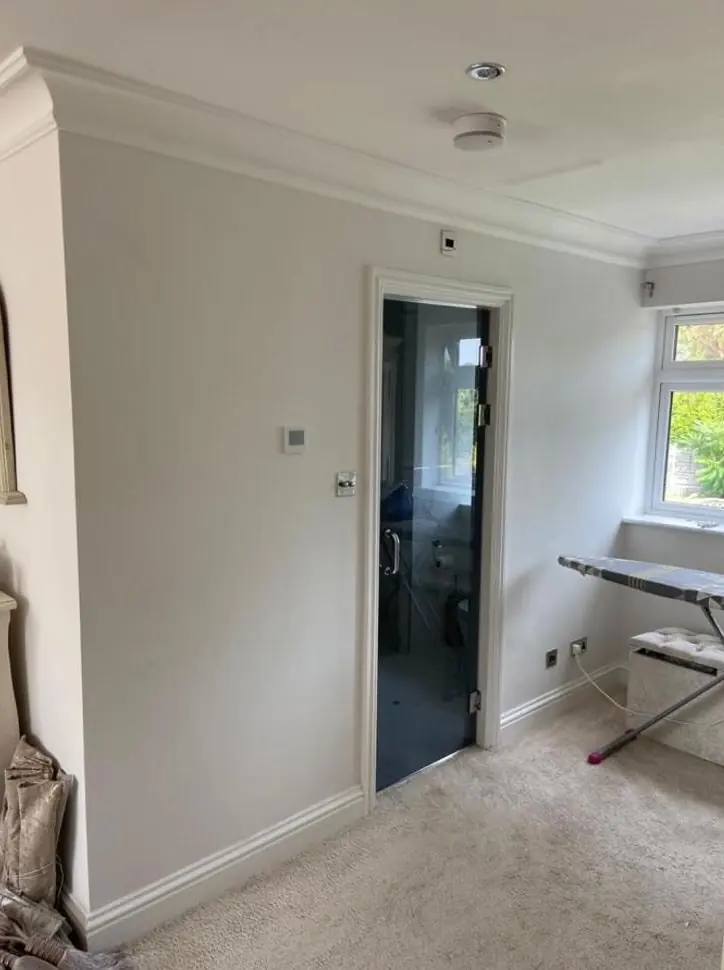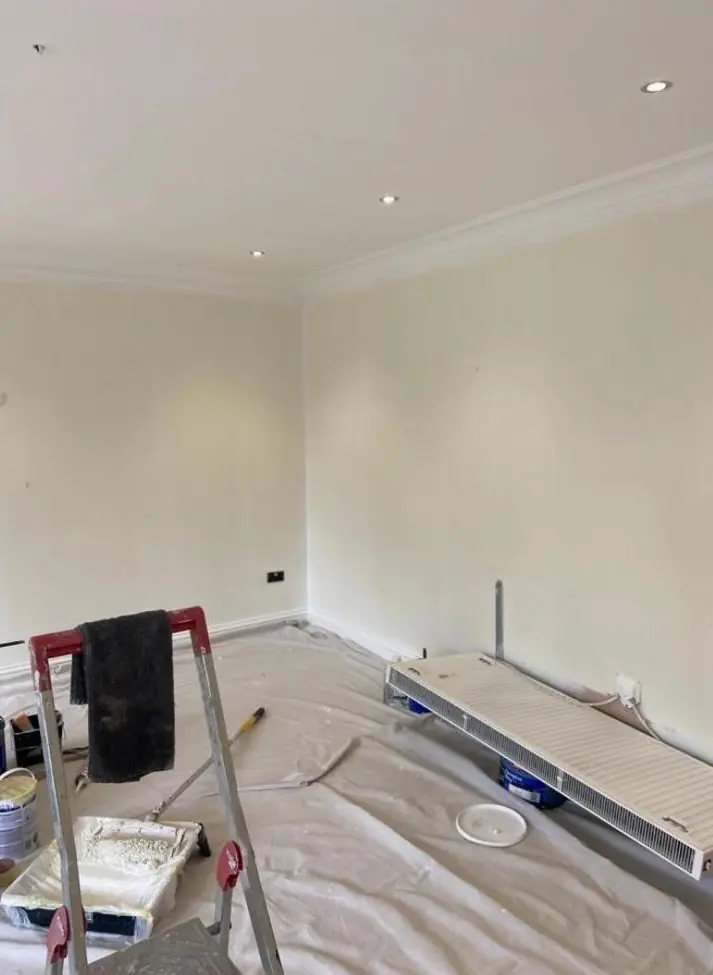
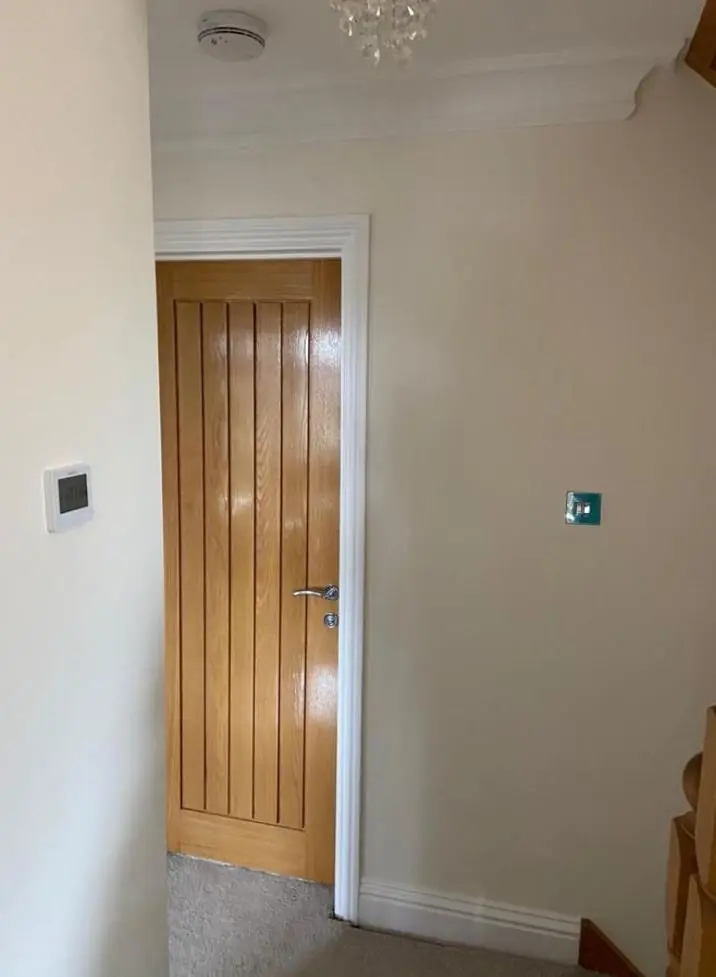
We apply decorative and heritage finishes in Bozeat, about 9.4 miles east of Northampton. For the old limestone cottages that often means limewash and traditional joinery colours. In the 1960s-70s estates and the post-1999 houses, it more often means feature walls, panelling and paint effects.
Limewash on Bozeat’s painted stone
Limewash is the traditional painted finish for limestone, and on Bozeat’s painted fronts it is still the first option we look at. It is made from slaked lime and water, sometimes with natural pigments. It soaks into the surface, lets the wall breathe and cures to a matt, slightly uneven finish that changes with the light and the weather. That suits cottages like Little Thatch on Dychurch Lane and 5 Dag Lane, whose limestone fronts are already painted.
It is also a finish with its own rules. Limewash goes on in several thin coats over a dampened wall and must not dry too quickly, so it is not a job for hot, windy or frosty days. It will not bond over a plastic masonry paint, so where an old front has been coated with one at some point, we test first. It may need stripping before limewash will take. It also needs renewing more often than a modern paint, which is the trade-off for a wall that can dry out. Inside, limewash and lime-based paints work well on the uneven solid walls of the older cottages, giving a soft texture that a vinyl emulsion cannot match.
Picking out period joinery
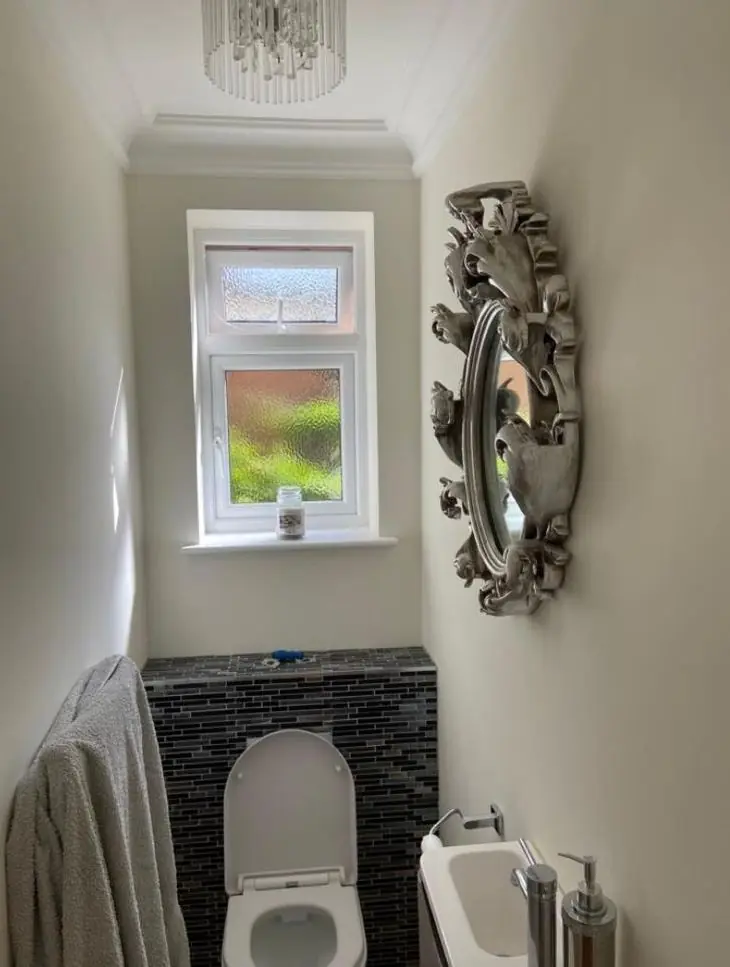
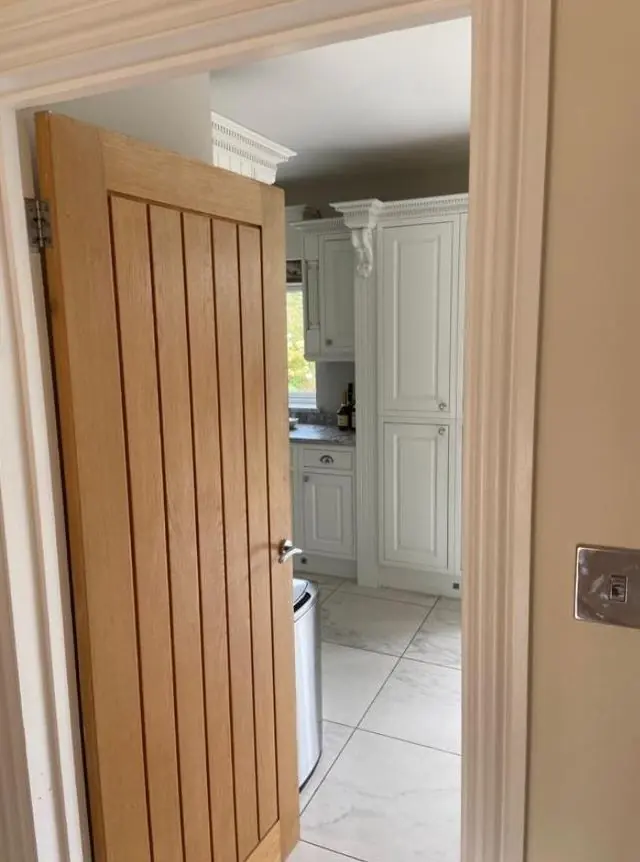
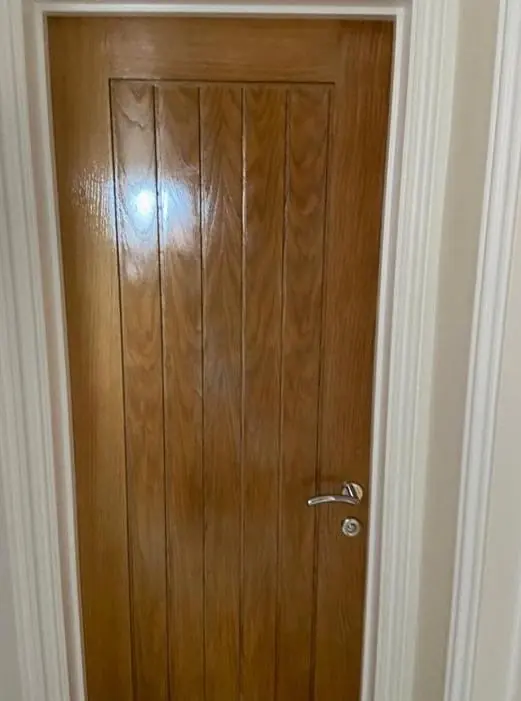
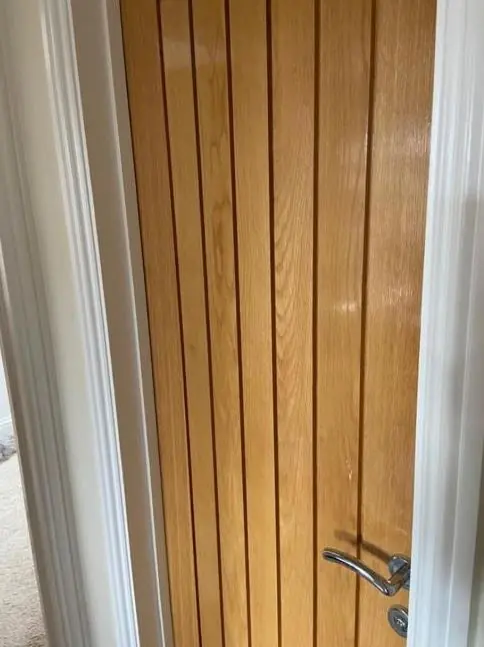
The older houses keep a lot of joinery worth emphasising. Manor Farmhouse on Dychurch Lane has 19th-century panelled doors, several houses have leaded casements under wood lintels, and 42 High Street has a wooden oriel window. Panelled doors can be painted in two tones, with the mouldings, panels and stiles in close shades of one colour, so the shape of the door reads without looking busy. The listing for the Grade I St Mary’s Church records painted dado panels inside, so painted panelling is not a new idea in Bozeat.
On listed buildings the line between redecorating and altering is worth respecting. Graining, marbling or bold contrast on original joinery can change a building’s character, so for anything more than a sympathetic colour we suggest a word with North Northamptonshire Council first.
Feature walls for the estate houses
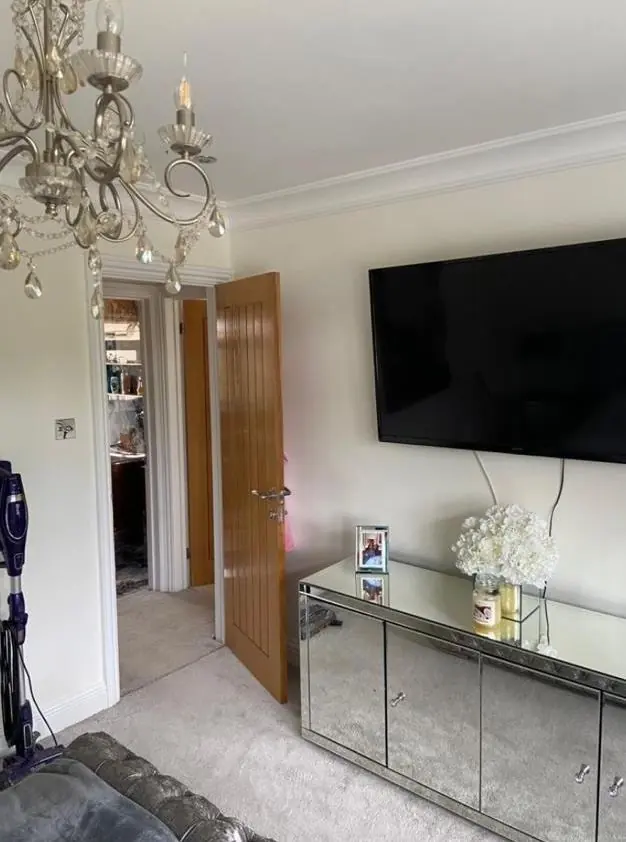
The three private estates built in the 1960s and 1970s and the homes on the old Gola factory site, built after 1999, have flat walls and square-cornered rooms. That makes them a good canvas for hand-painted work that would look out of place in a 1700s cottage:
- Two-tone splits and colour blocking on living room and stair walls
- Painted arches and geometric shapes to zone an open-plan space
- Applied panelling or picture-frame moulding, painted to match or contrast with the wall
- Glaze effects such as colour washing on a single chimney breast
Where a post-1999 house still has its plain builder’s finish, a single feature wall is a small job that changes the room noticeably.
Matching the finish to the house
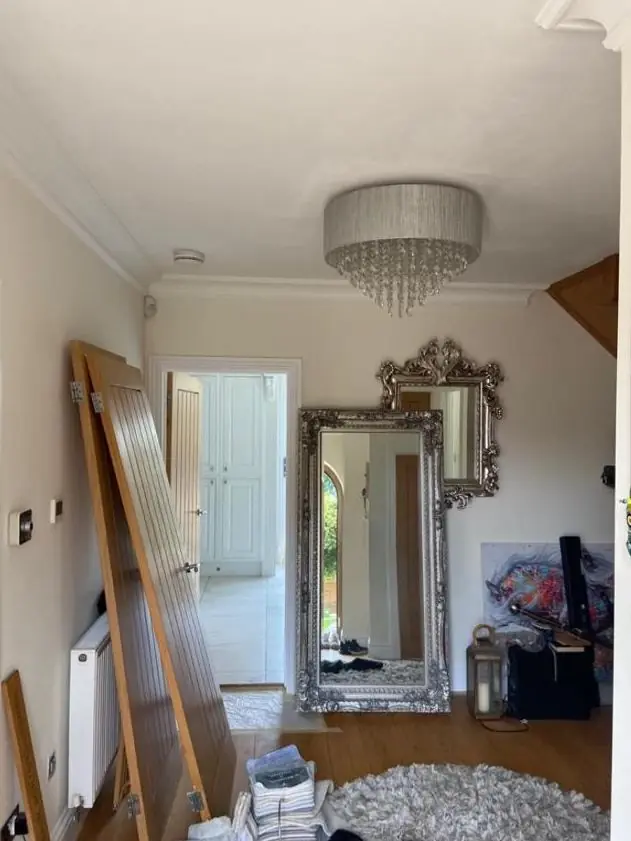
The question we ask first in Bozeat is which house the finish is going into. A crisp geometric feature wall will look smart in a newer estate home and odd on a bowing wall in a thatched cottage, while limewash on new plasterboard will just look unfinished. Dean will tell you honestly if he thinks an effect will not suit the room, and suggest a quieter alternative that will. Our decorative finishes page covers the full range of effects, and the Bozeat area page describes the village’s houses in more detail.
Last updated by Dean, DH Painter & Decorator.