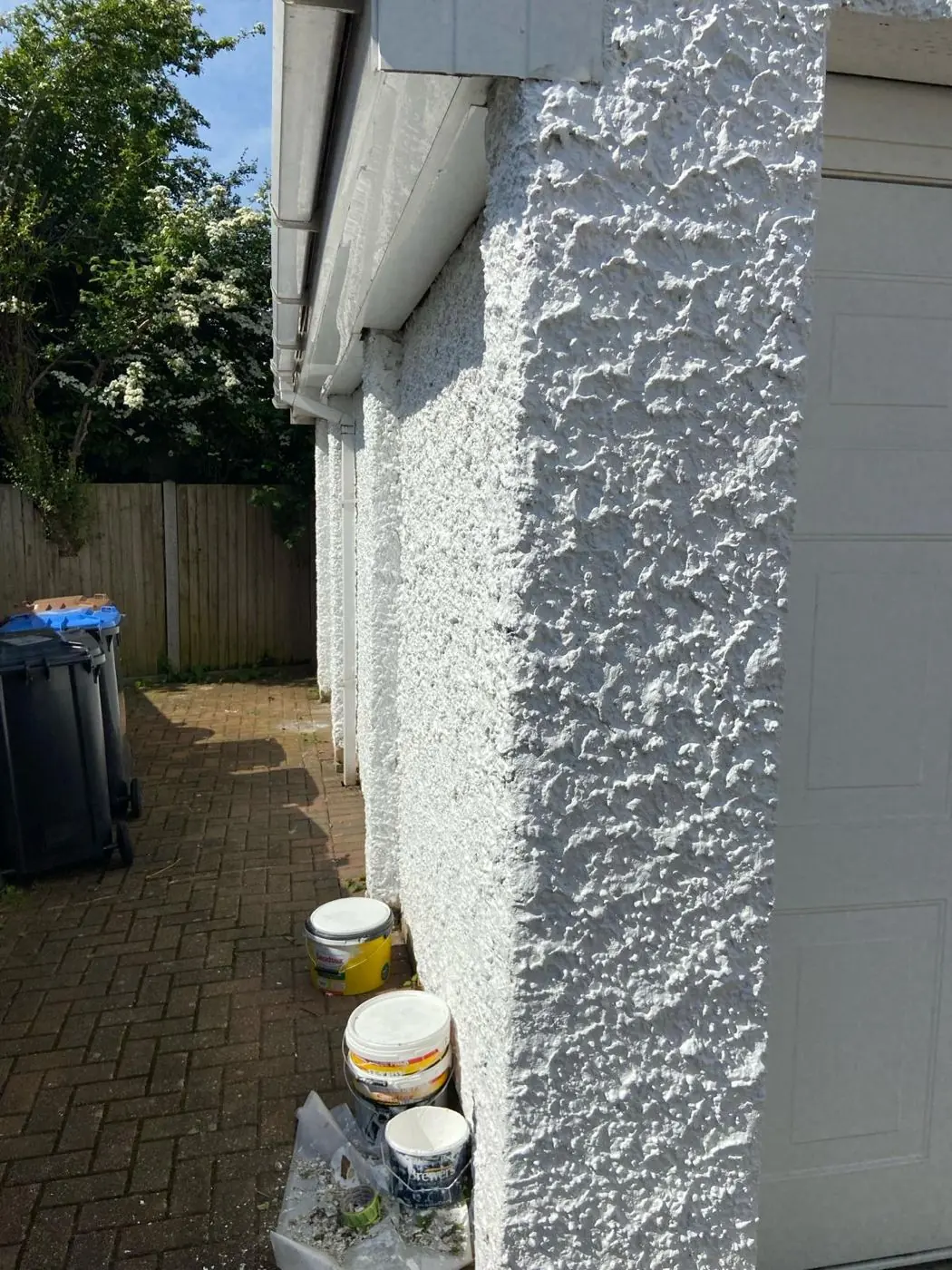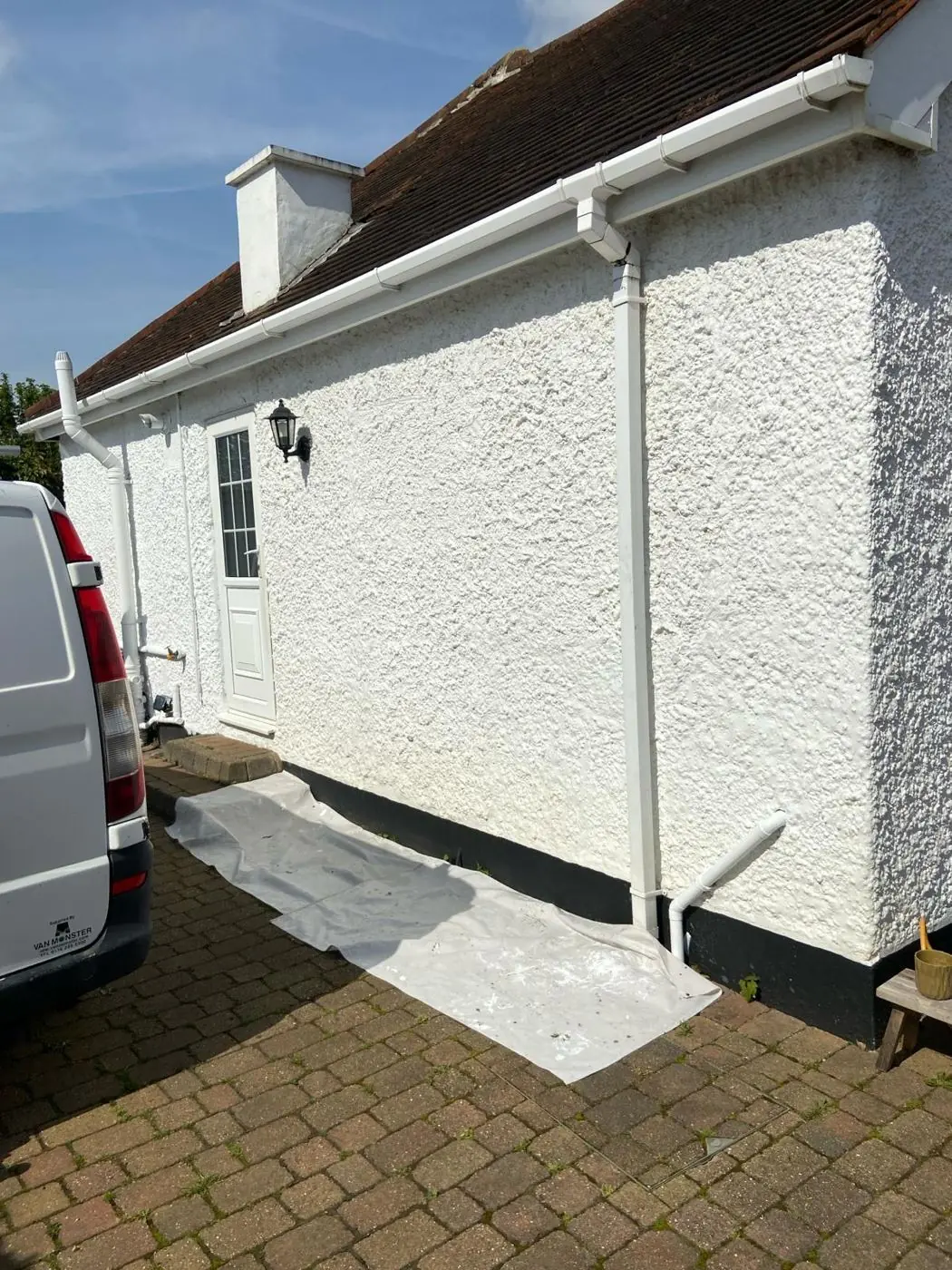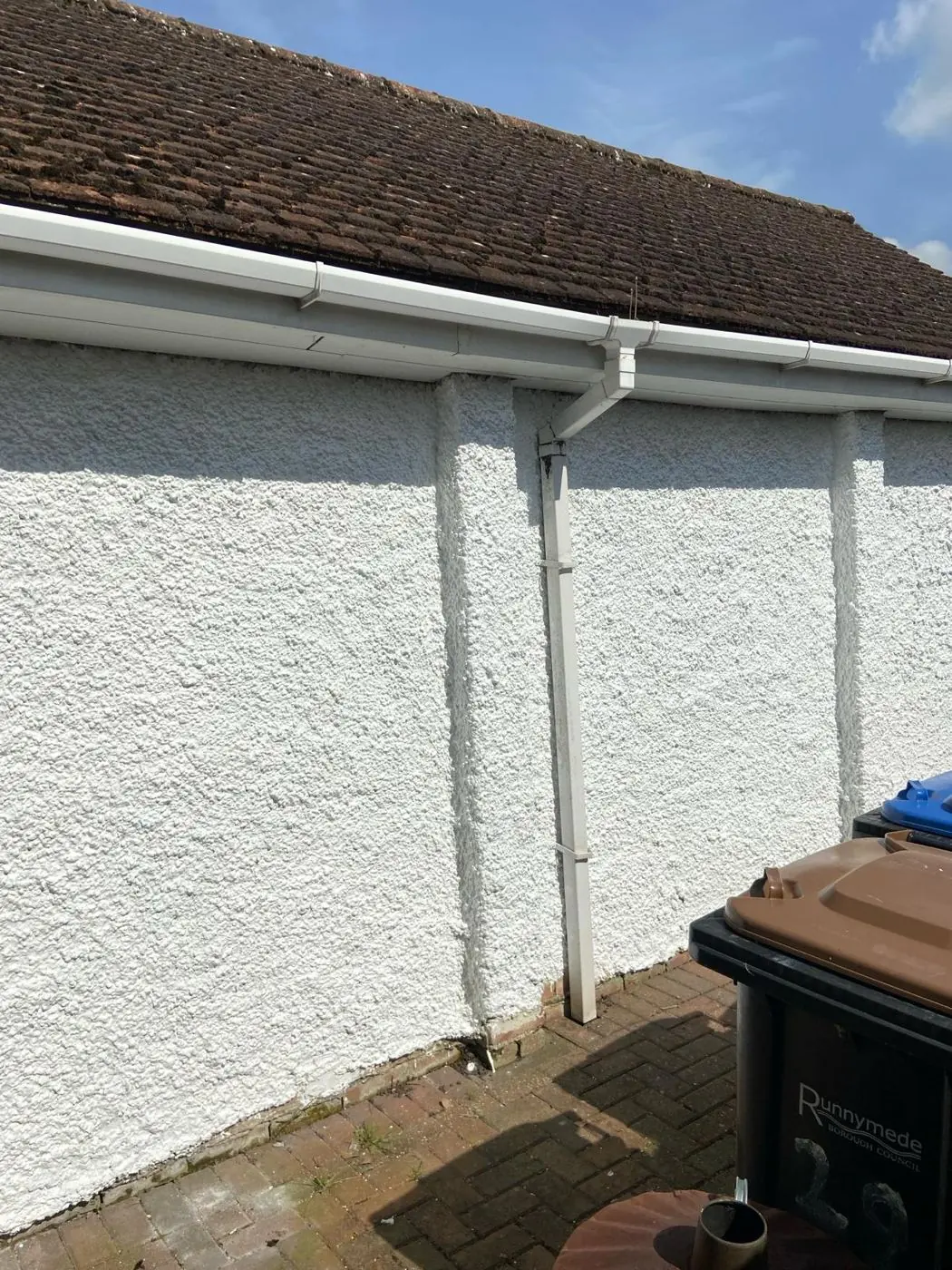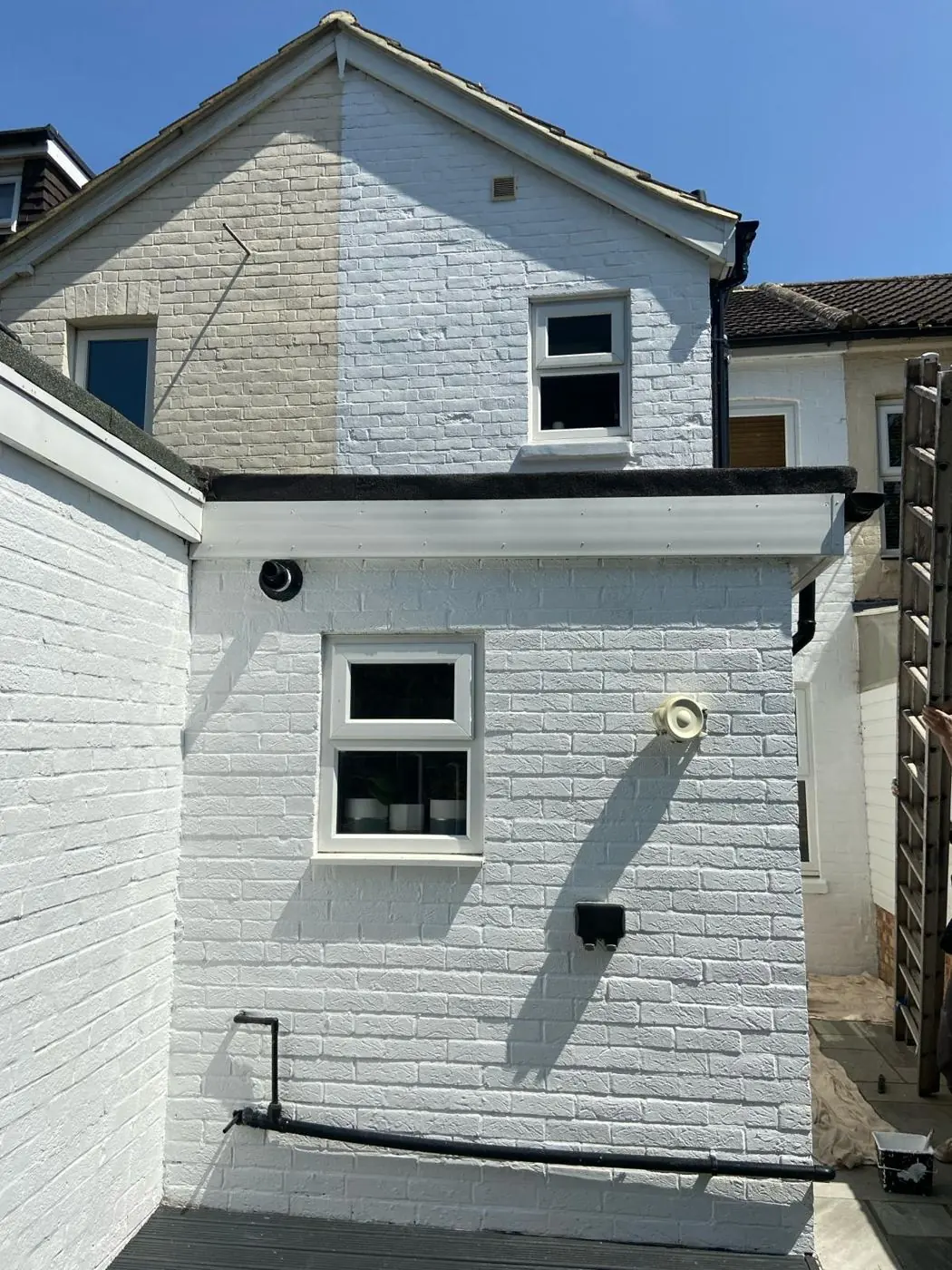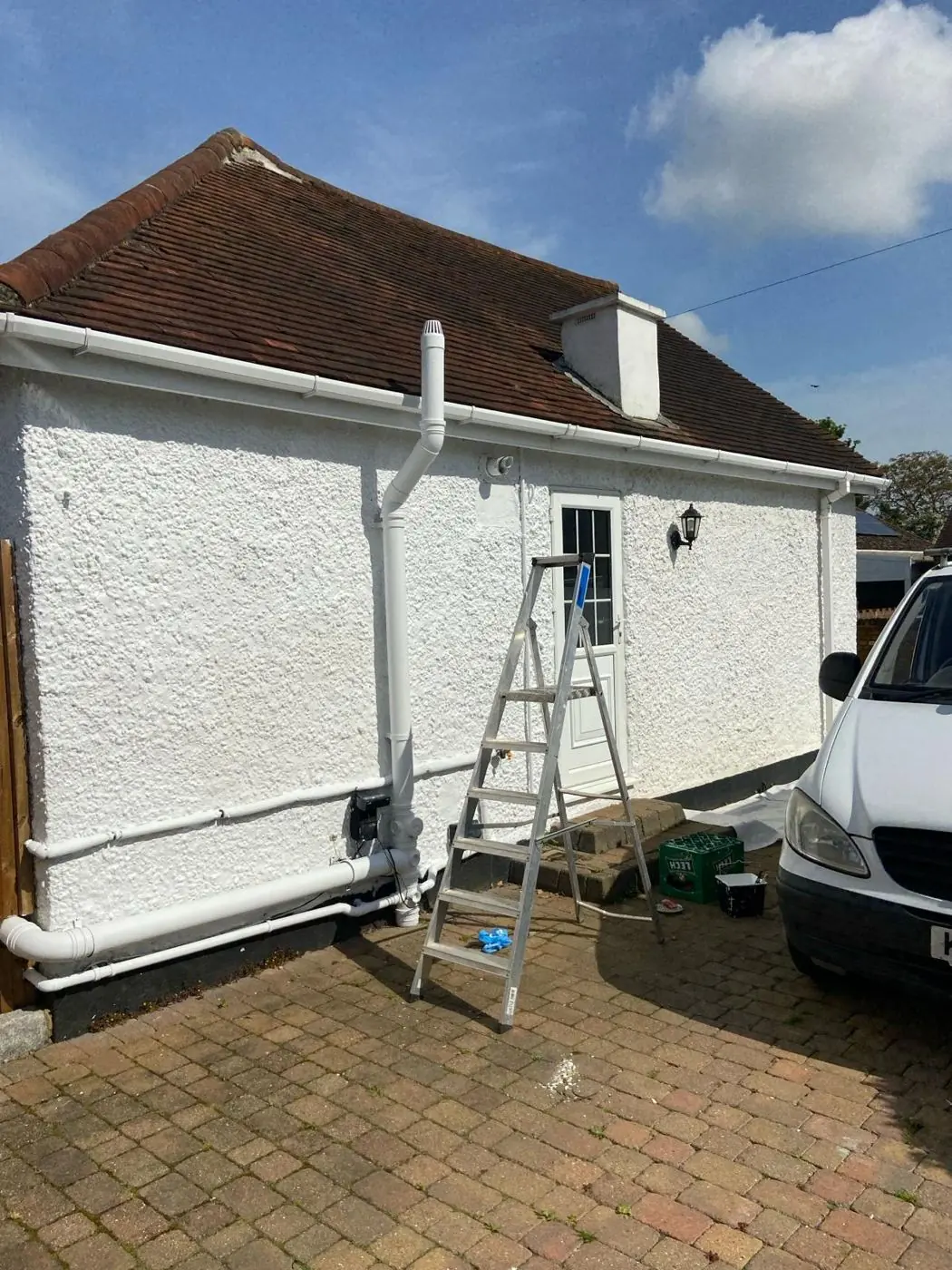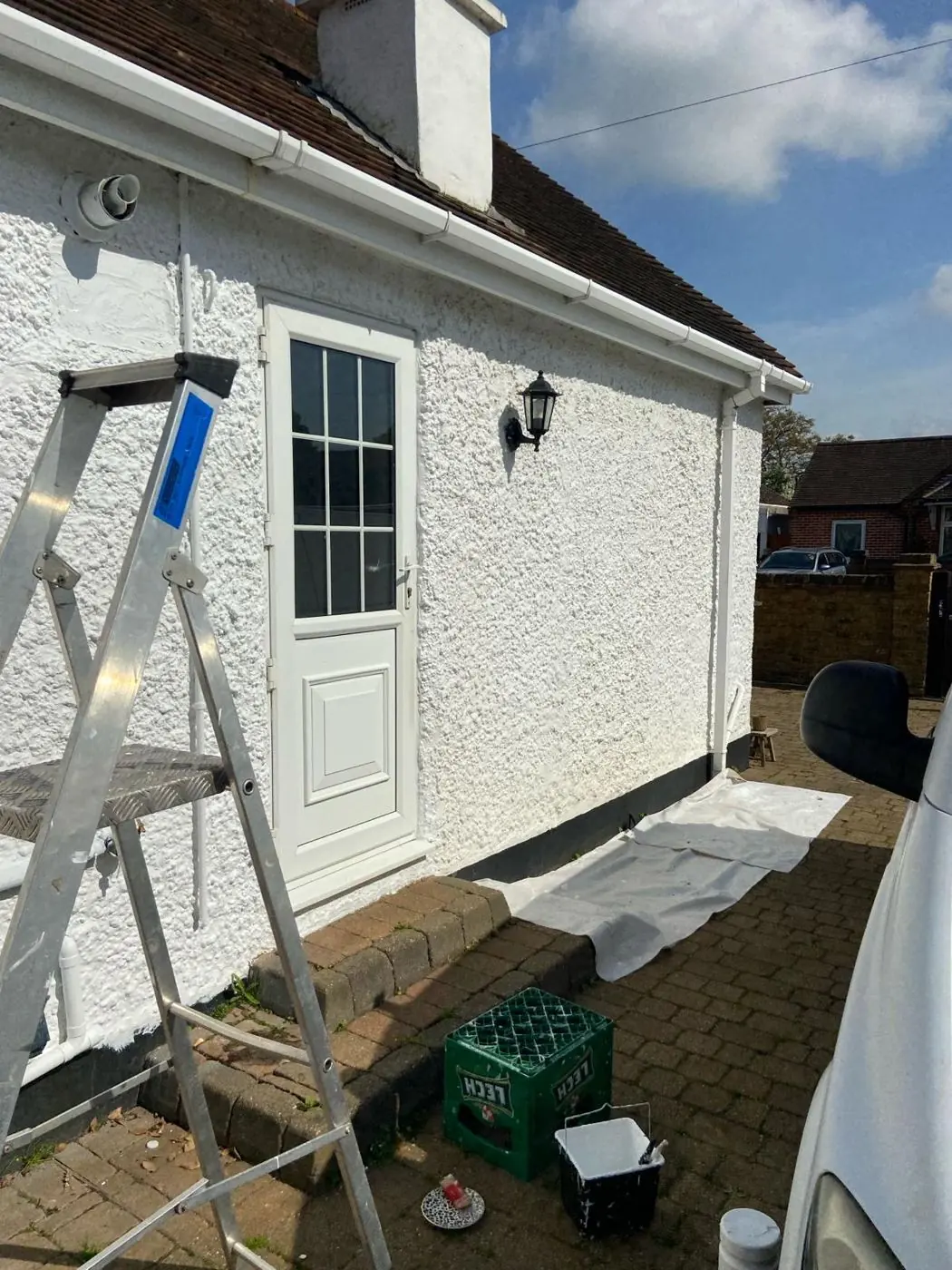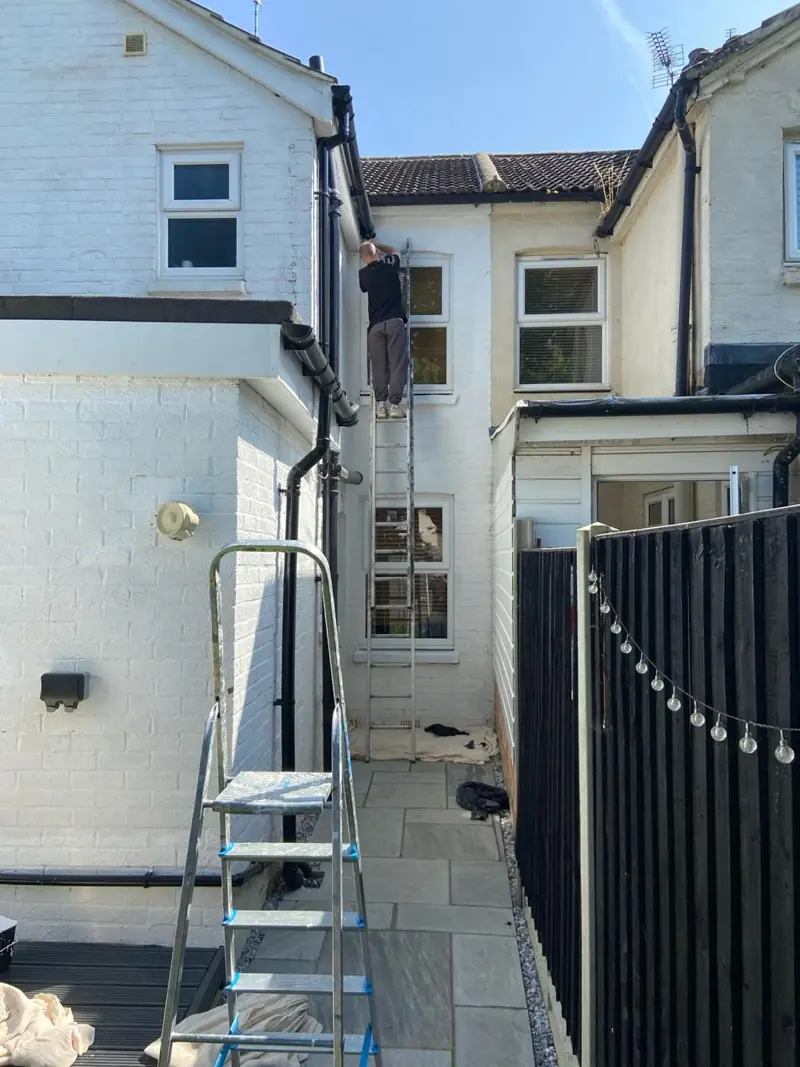
We paint render, stucco and painted stone walls in Bozeat, a limestone village in North Northamptonshire about 9.4 miles east of Northampton. Dean works out what each wall is made of first, then picks a coating that lets old stone breathe or suits a modern rendered house.
What the walls in Bozeat are made of
Most of the oldest houses in the village are regular coursed or squared coursed limestone. Many of these walls have never been painted. A few have been coated over the years, and the listed building records show three different finishes on that stone:
- Painted limestone, as on Little Thatch on Dychurch Lane and 5 Dag Lane, both Grade II.
- Stucco over limestone, as at Burnt Close on Church Walk.
- Part render, as on East Farmhouse and its attached barns.
So a render or masonry job in Bozeat is often not the sand and cement render that covers modern estates. It is a thin coat of stucco, often lime-based on walls of this age, or old paint sitting on a thick stone wall, and the coating has to work with that wall rather than seal it.
Letting solid stone dry out
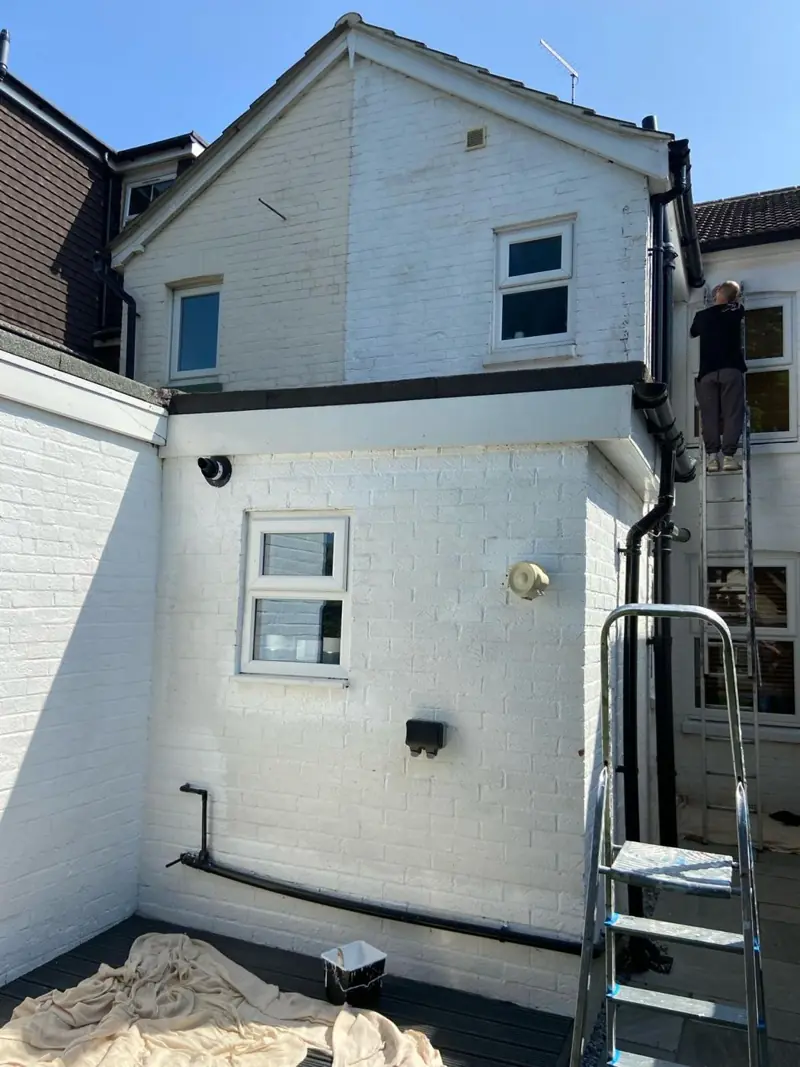
A limestone wall with no cavity takes in rain on its face and gives it back out when the weather dries. If you coat it in an acrylic or plastic masonry paint, the water can no longer escape through the face. It builds up behind the film, pushes the paint off in blisters and can show up indoors as damp patches on the inside of the wall. On these walls we use mineral silicate paint or a limewash-compatible system, chosen after we have tested what the existing coat is. Where an older wall has already been given a modern paint that is now failing, we talk through whether to remove it before recoating.
Tapping the stucco before any paint goes on
Old stucco and render over stone tends to come away from the wall in places. Before we quote for painting, we go over the rendered areas by tapping to find hollow sections, and look for cracks round openings and at the base of the wall. Loose patches must be cut out and made good with a compatible lime-based mix and left to cure. Paint will not hold a hollow patch on, and painting over one only hides the problem for a season. If the repair is larger than a patch, we tell you so and suggest a specialist plasterer.
Cracks are worth reading as well as filling. A fine crazed pattern over the whole face is usually the stucco itself ageing. A single crack running up from a window corner or along the line of a wood lintel can mean the timber behind has moved or rotted, and that is checked before the crack is filled. At the foot of a wall, render that has been taken down to the ground can wick up water and stay damp, which shows as a tide mark and flaking paint in the bottom course.
Bare stone, datestones and listed consent
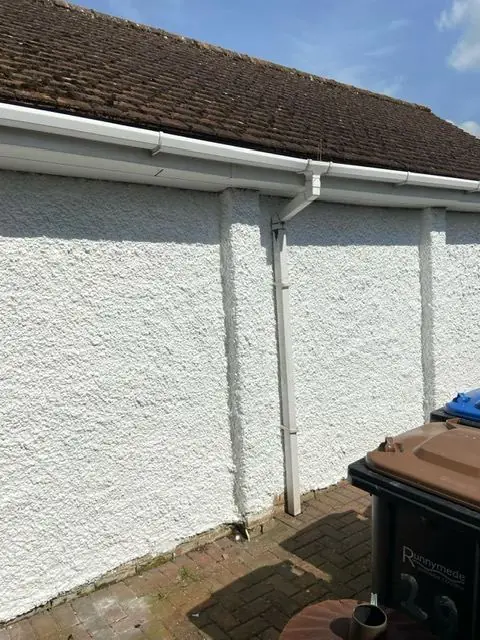
If your house is one of Bozeat’s listed buildings and its limestone front is bare, it should stay that way. Painting a listed stone front for the first time is a change to its character and would need listed building consent from North Northamptonshire Council. The same care applies to the datestones from after the 1729 fire, such as the one at 29 Mile Street. On a painted wall we ask whether you want a datestone picked out or left as plain stone.
Render on the estates
The 1960s and 1970s estates and the houses on the former Gola site are a different matter. Where these have rendered panels, they normally take a fungicidal wash, a stabiliser on chalky areas, crack filling and two coats of breathable masonry paint, as described on our main render and masonry painting page. Our guide to painting render and roughcast covers the detail, and the Bozeat area page lists the other work we take on in the village.
Last updated by Dean, DH Painter & Decorator.