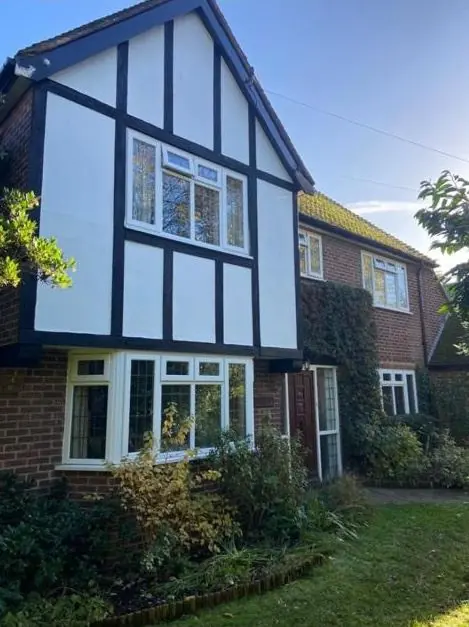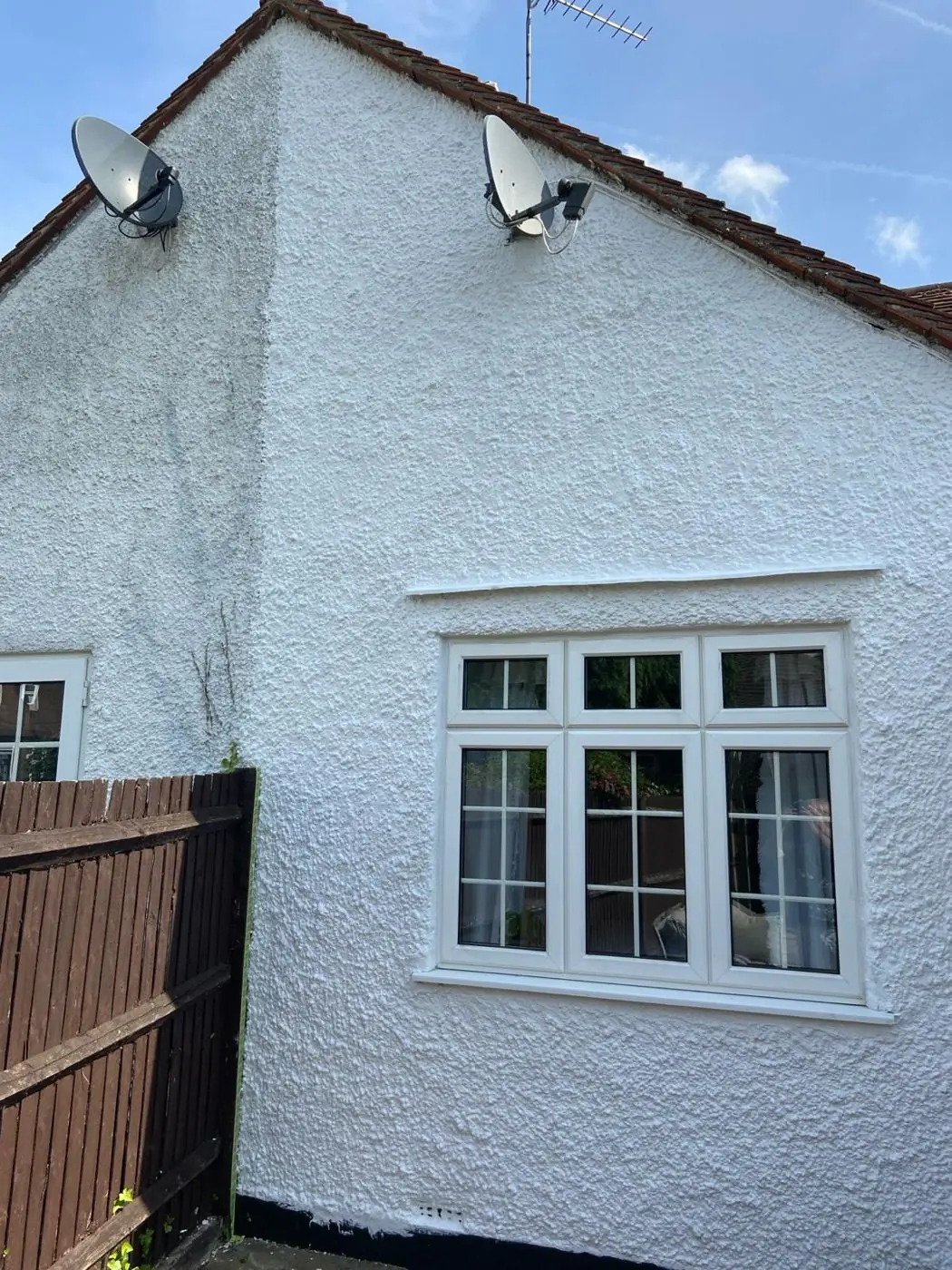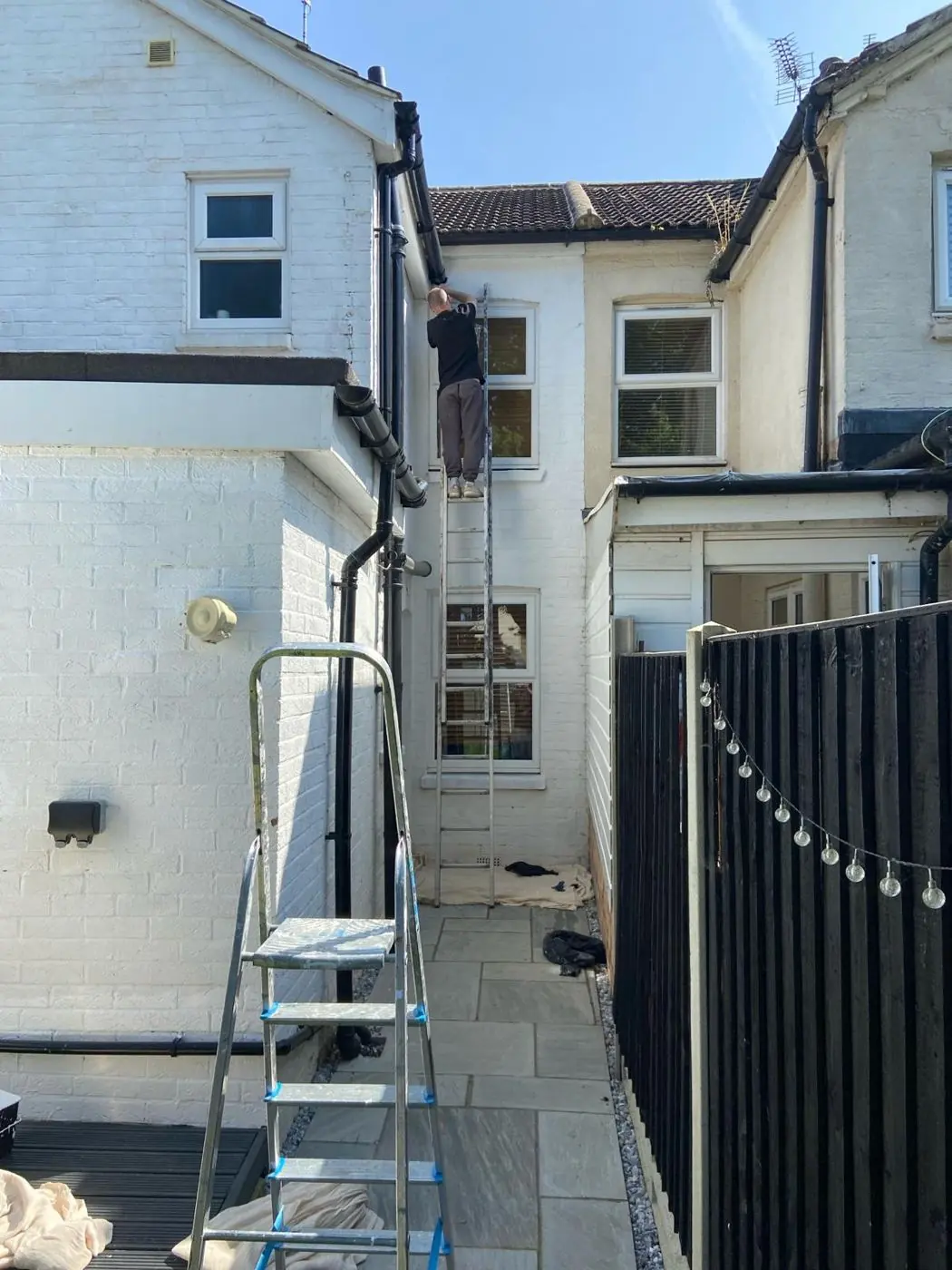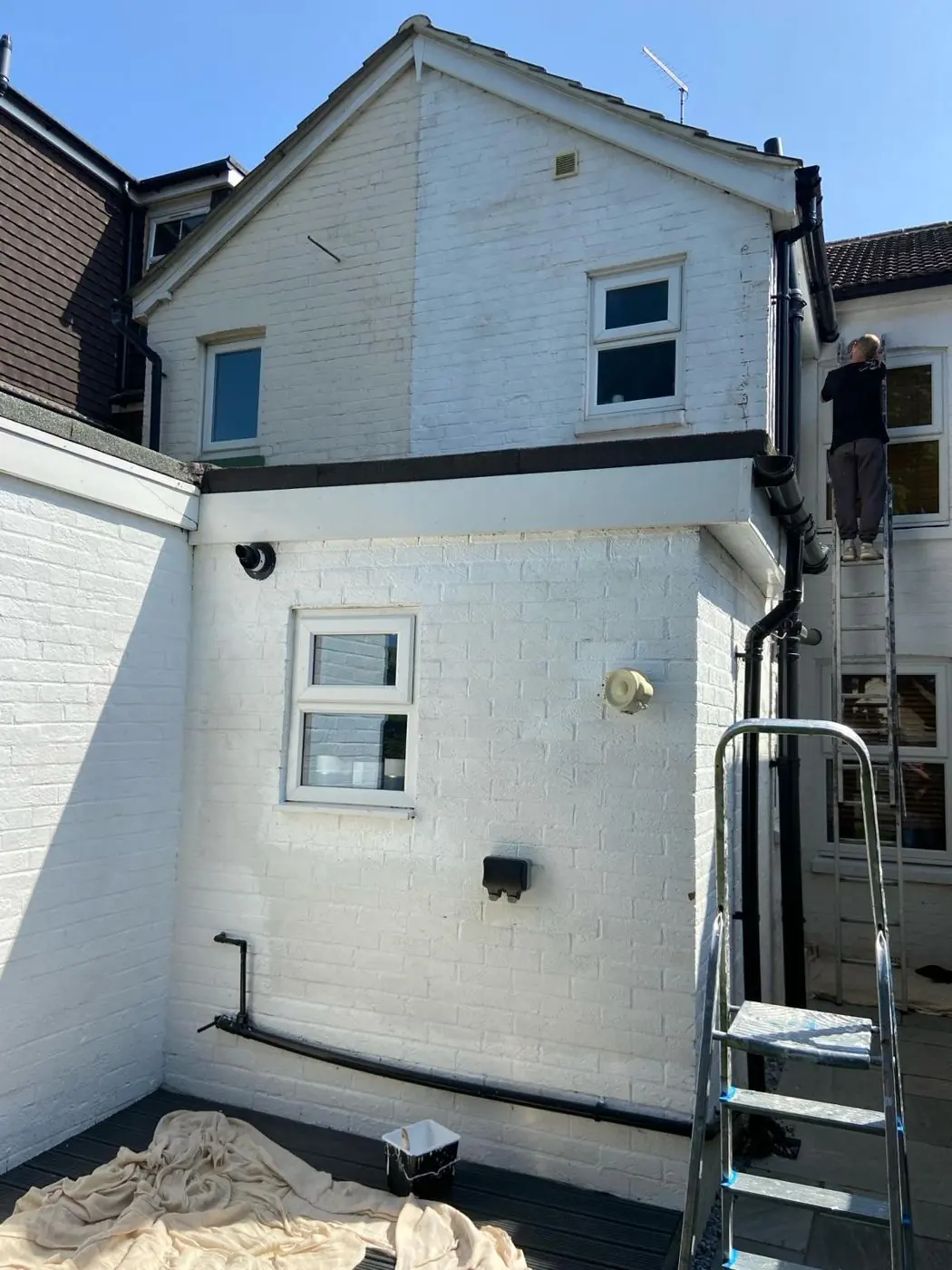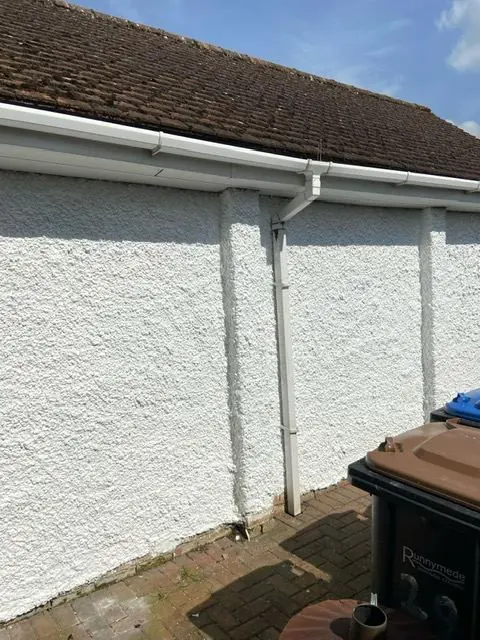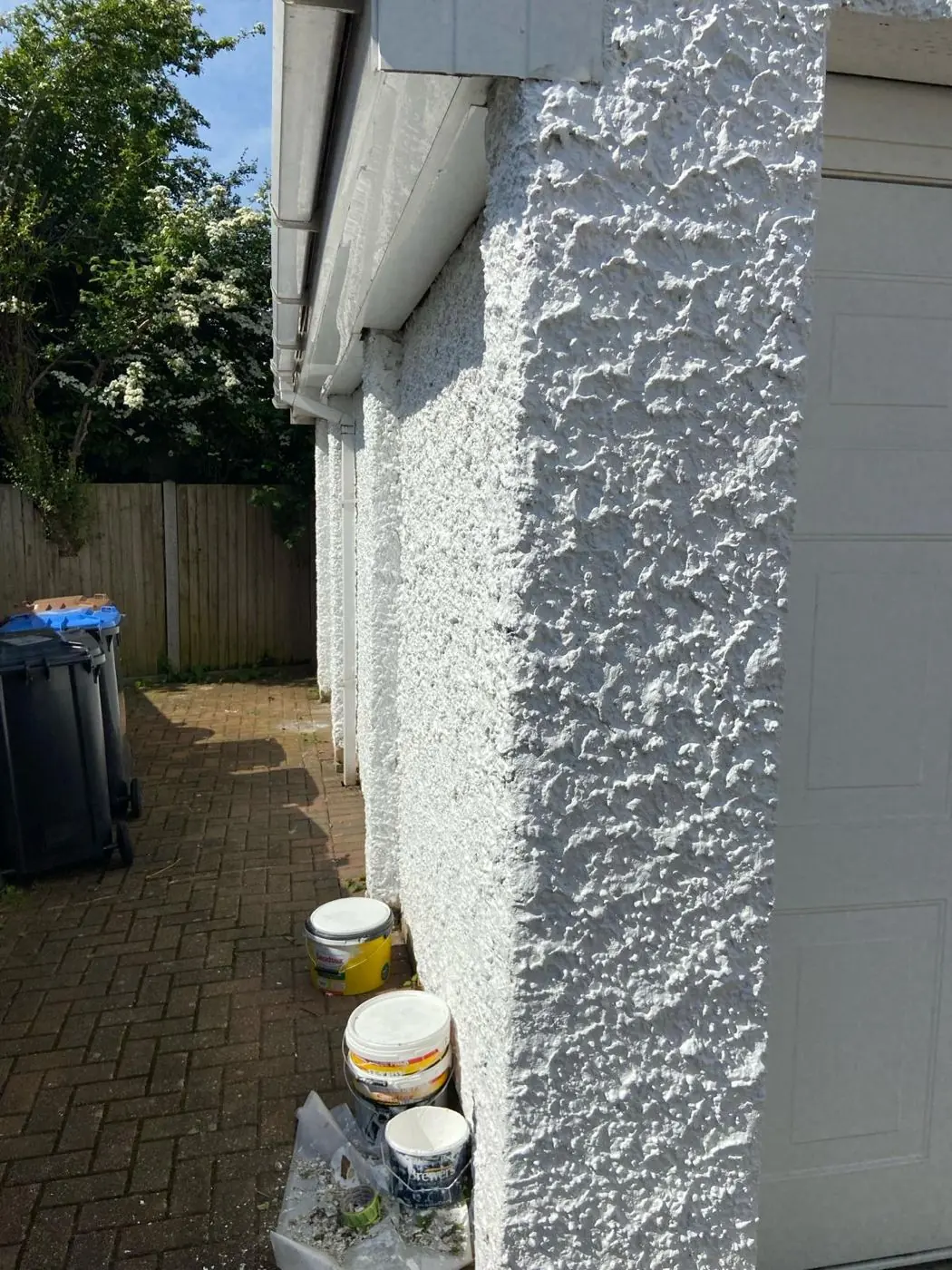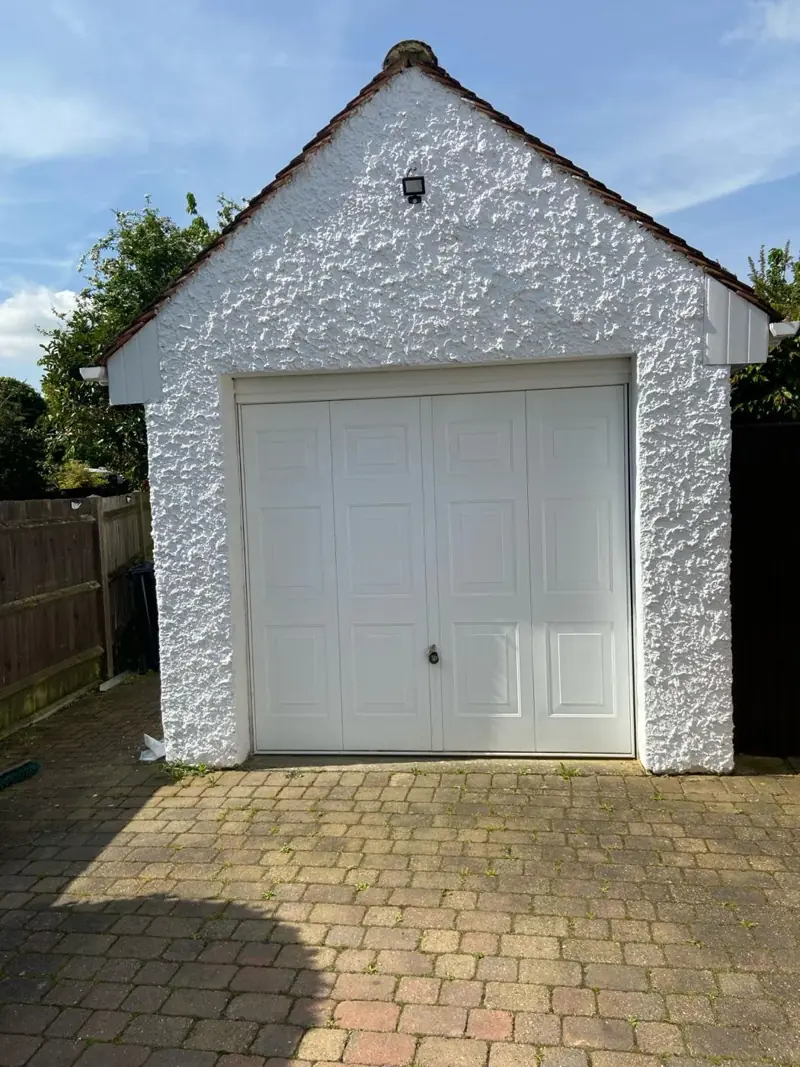
We repaint timber fascias, soffits, gutters and downpipes on houses in Bozeat, about 9.4 miles east of Northampton. Most of this work in the village is on the post-war estates and newer housing, because the thatched cottages in the old core have deep eaves with no fascia boards at all.
Why most thatched cottages need no roofline painting
Several of Bozeat’s listed cottages, including 29 Mile Street, Little Thatch on Dychurch Lane, 3 Easton Lane and Milestone House on London Road, are thatched. A thatched roof finishes in a deep overhanging eave with no fascia or soffit board, and rainwater is shed off the thatch rather than collected in a gutter. There is nothing to paint at the roofline. Where we work below thatch on windows or walls, we keep ladders well clear of it.
Some older houses in the village have plain tile, slate or pantile roofs instead. Where one of these has a timber board along the eaves or verge, we treat it like any old joinery: scrape back failed paint, check for soft timber and use a flexible oil-based system. On a listed building we keep to the existing colour.
The 1960s and 1970s estates
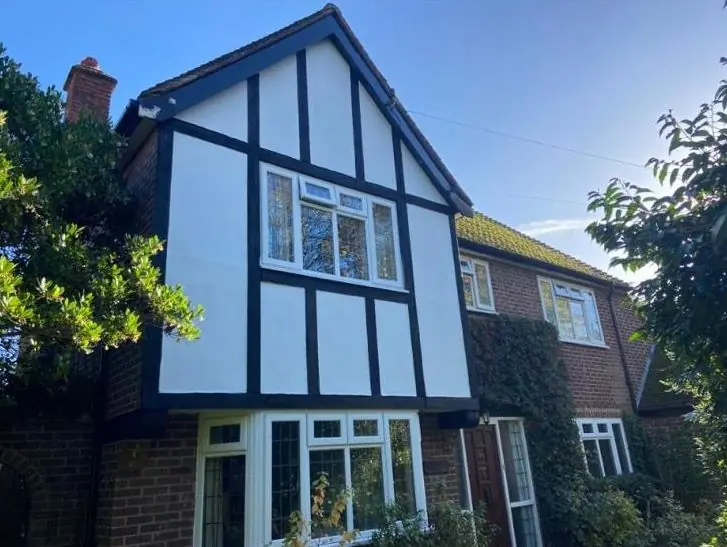
Bozeat gained three private housing estates in the 1960s and 1970s, and these make up the bulk of the roofline work in the village. Houses from that era were typically built with timber fascias and soffits, and where those boards survive they can carry several decades of paint. Common problems we check for on a house of this age:
- Soft or split timber at the ends of fascia boards, where gutters have overflowed.
- Soffit boards that have dropped or opened at the joints.
- Thick, cracked layers of old gloss that need taking back before a new coat will hold.
- Gutter brackets and downpipe clips that have rusted or worked loose.
Small areas of rot can be cut out and filled with an exterior wood repair system. Longer lengths of rotten board are a carpentry job, and we will tell you if a section should be replaced before it is painted. Older paint layers on a house from the 1960s are treated as possibly containing lead, so we scrape and wet-sand rather than power-sand them.
Houses on the former Gola site
The Gola sports brand was based in Bozeat as the Bozeat Boot Company, and its factory was demolished in 1999. More than 30 families now live in the housing built on the site. Those homes are past 20 years old, so builder-applied finishes on any timber rooflines are usually on their first coat and starting to fade or flake on the sunniest side. A first full redecoration at this stage is mostly preparation and two good coats, rather than repair.
| Where in Bozeat | Typical roofline | What we usually find |
|---|---|---|
| Thatched listed cottages | Deep thatch eaves, no boards | Nothing to paint at the roofline |
| 1960s-70s estates | Timber fascias and soffits | Built-up paint, rot at board ends |
| Post-1999 Gola site homes | Original builder finish | Faded first coat, due a full repaint |
Exposure on the edge of the county
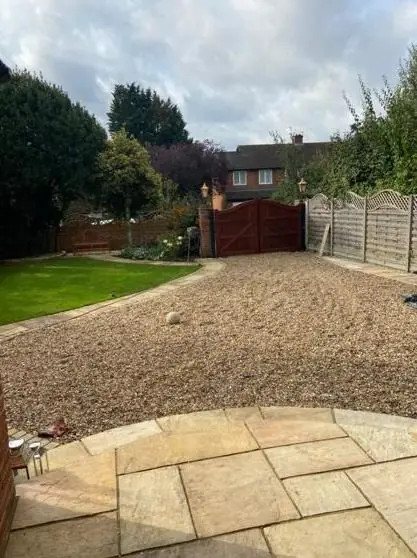
The village is surrounded by farmland on the borders of Buckinghamshire and Bedfordshire, so the windward side of a house can take driven rain while the south side gets full sun. We look at both faces before quoting, because they rarely wear at the same rate. On a house where only the sunny side is flaking, a part repaint can be enough for now, although the colour will not match perfectly until the whole roofline is done. Access is usually simple on the estates, with front gardens and driveways where a ladder or small tower can stand. We still ask about conservatories, porches and flat-roofed extensions below the eaves, because they decide how we reach the boards above them. If you are budgeting for the roofline alongside other outside work, our cost guide explains what affects a quote. The step-by-step method for fascias, gutters and downpipes is on our main fascia and soffit painting page, and the rest of our work in the village is on the Bozeat page.
Last updated by Dean, DH Painter & Decorator.