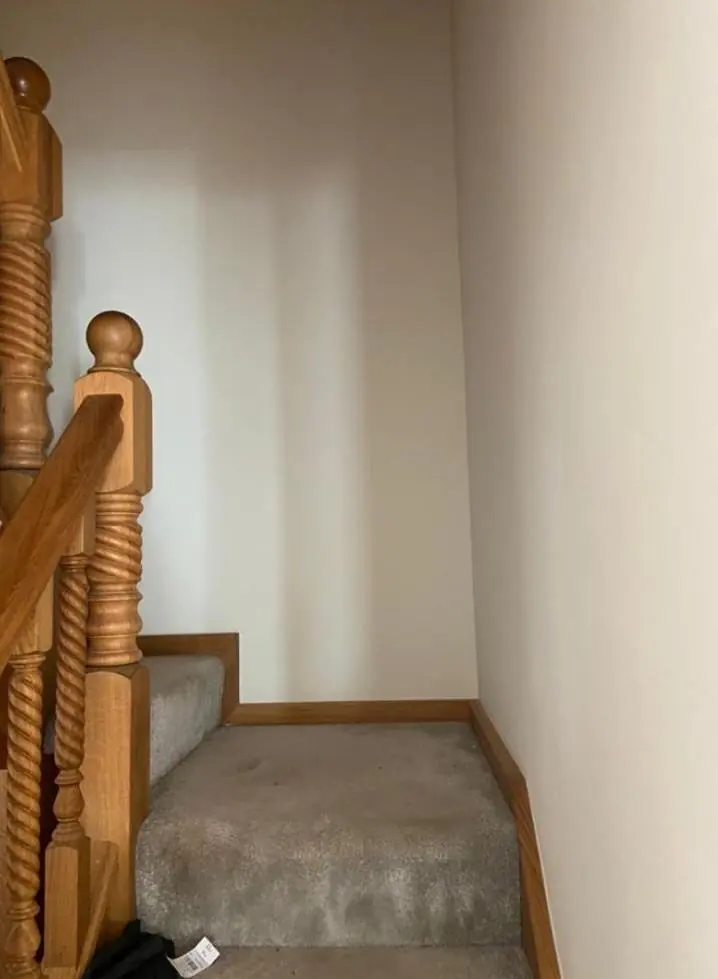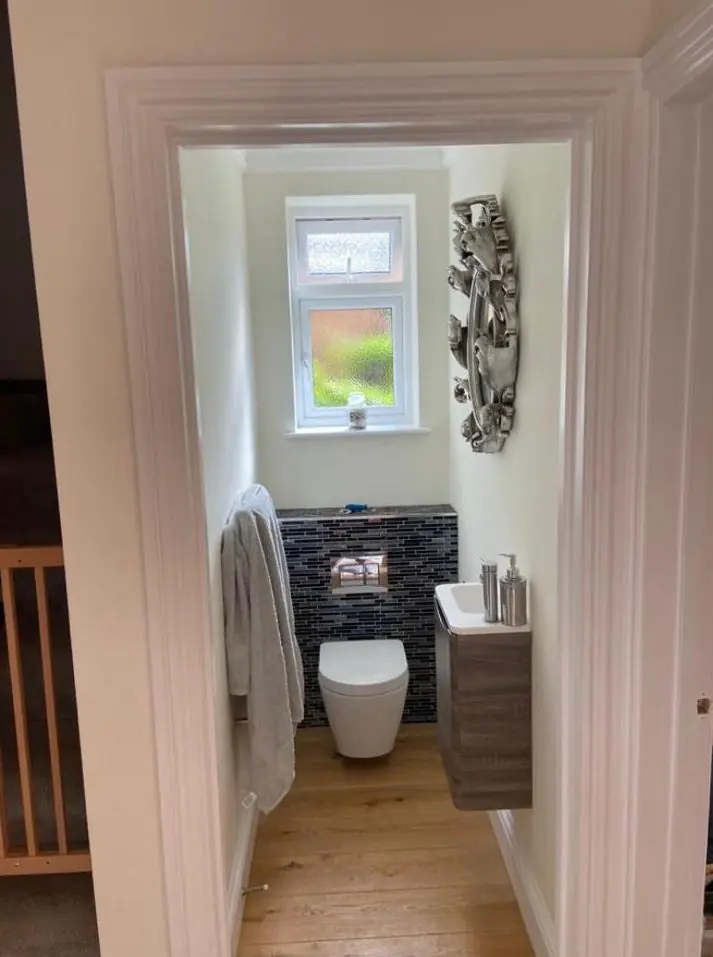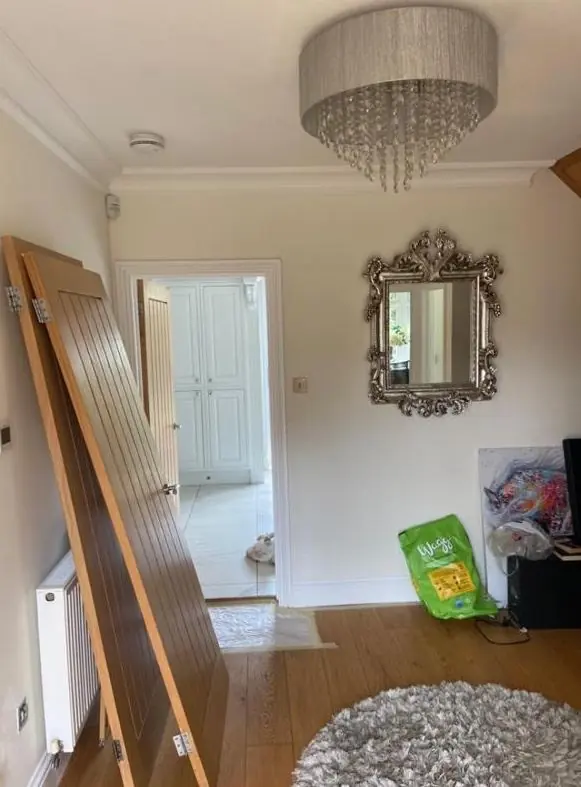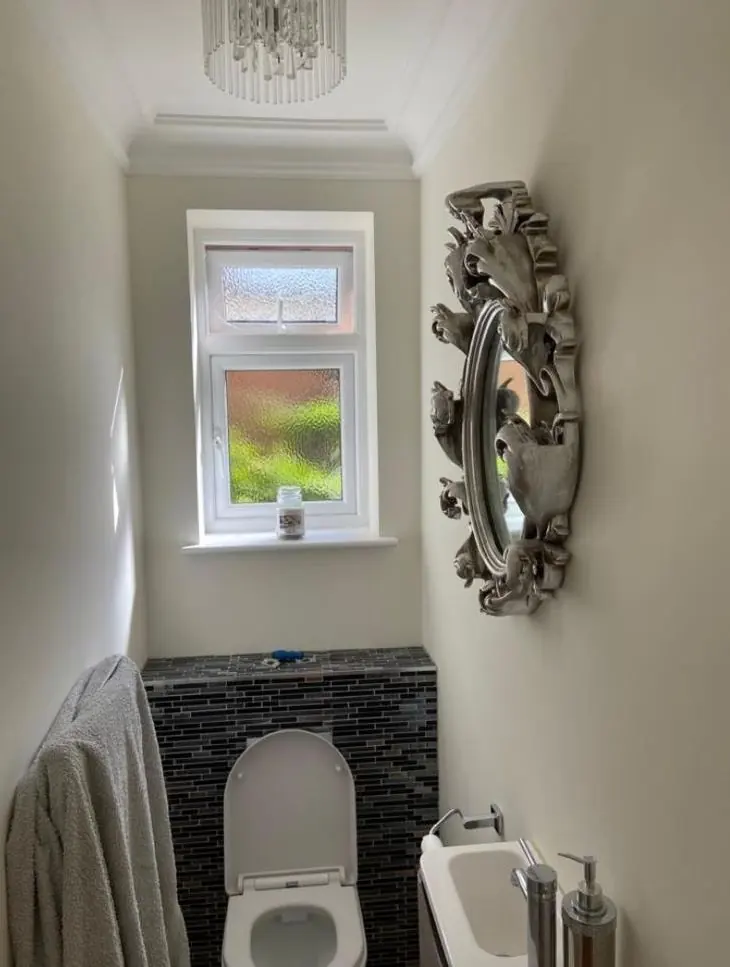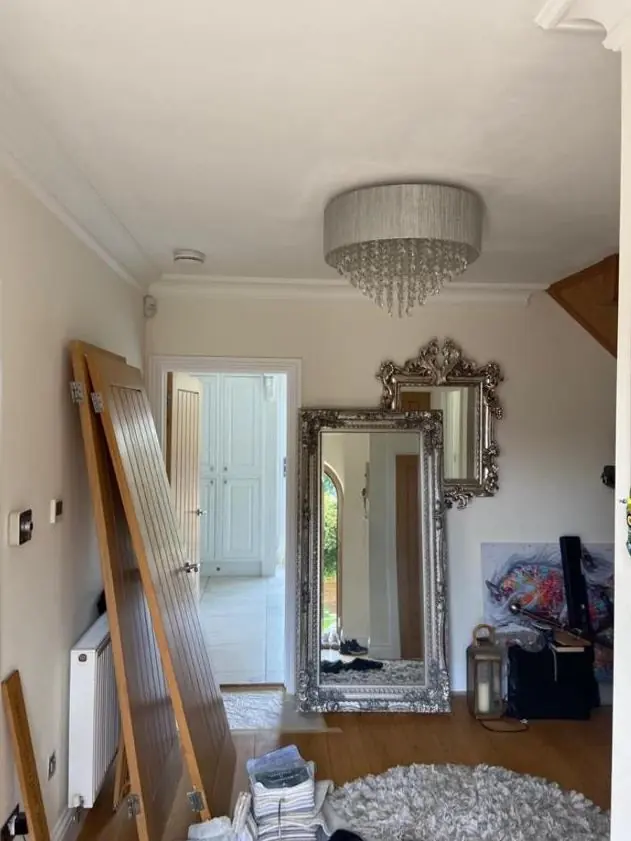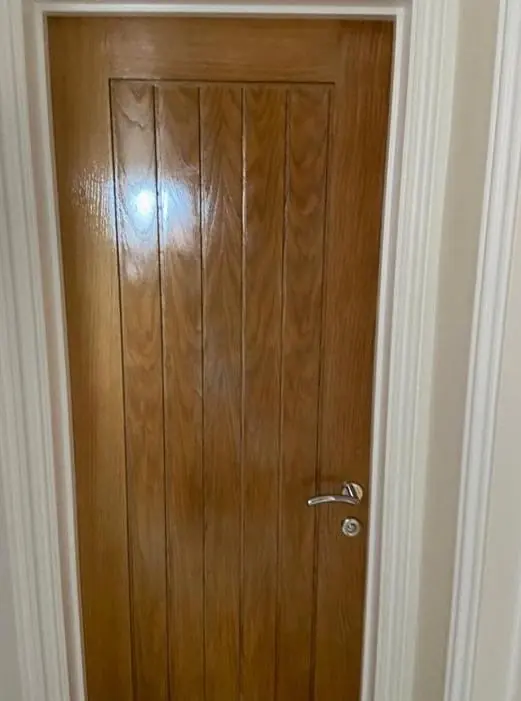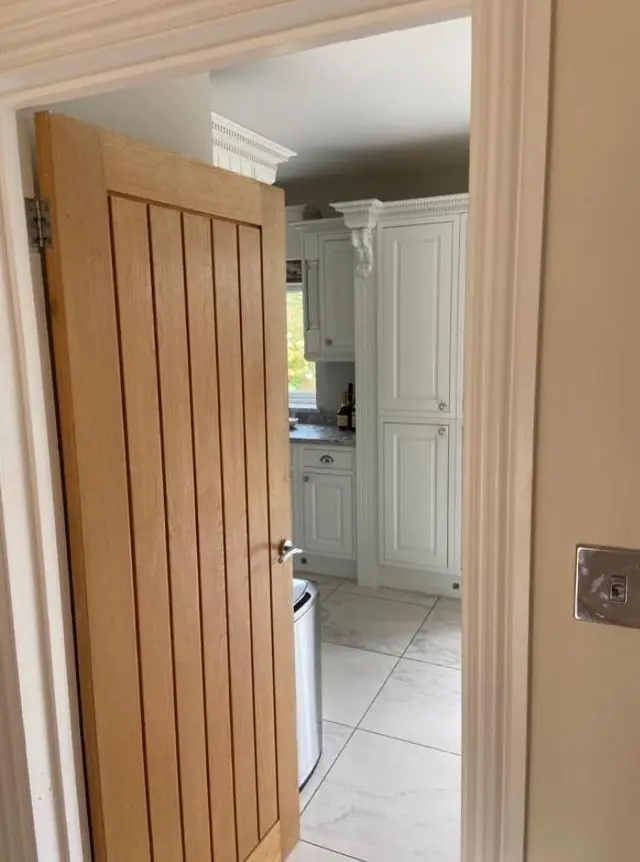
Dean paints internal and external doors, skirtings, architraves, casement windows and staircase woodwork in Bozeat, about 9.4 miles east of Northampton on the A509 side. The village has two very different kinds of joinery: hand-made timber in its 17th and 18th-century limestone cottages and farmhouses, and standard machined woodwork in the 1960s-70s estates and the houses built after 1999.
Casements, leaded lights and wood lintels in the old core
The listed cottages on Dychurch Lane, Mile Street, Allens Hill and Dag Lane mostly have timber casement windows set under wood lintels, and several, including 29 Mile Street, 42 High Street and 56 Allens Hill, have leaded casements. These are slow windows to paint well. Each leaded panel has to be masked or cut in by hand, because spraying or a fast roller would put paint on the lead cames and the glass. We use a flexible oil or alkyd system on this timber, as it moves with the seasons in a solid stone wall better than a hard, brittle coating.
The wood lintel over the window is often the piece in the worst state. It sits exposed in the face of the limestone, takes the run-off from the wall above, and on thatched cottages it gets little protection from a gutter. When we paint casements in Bozeat we probe the lintel for soft timber in the same visit, prime any bare wood and point out rot that needs a joiner before the window is finished.
Panelled doors and 19th-century sashes
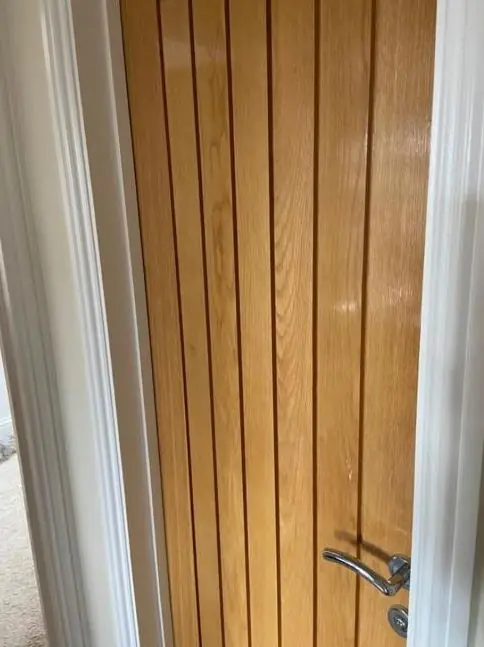
Manor Farmhouse on Dychurch Lane is recorded with 19th-century casements and panelled doors, and 29 Mile Street has two 19th-century sashes with yellow brick dressings. Joinery of that age usually carries many layers of paint, and the lower ones may contain lead. On this kind of woodwork the work is mostly preparation:
- testing the old paint before any sanding, and switching to wet abrading or low-temperature stripping if lead is found
- taking failed or crazed layers back to a firm edge rather than burying them
- filling with timber-compatible products that flex with the wood, not a rigid wall filler
- easing door edges and sash beads that bind because of paint build-up
Where a house is listed, a straight repaint of existing painted joinery is normal maintenance. Stripping out historic doors or changing how the frontage looks is a different matter, and we would ask what North Northamptonshire Council has agreed before going further.
Estate and post-1999 joinery due a refresh
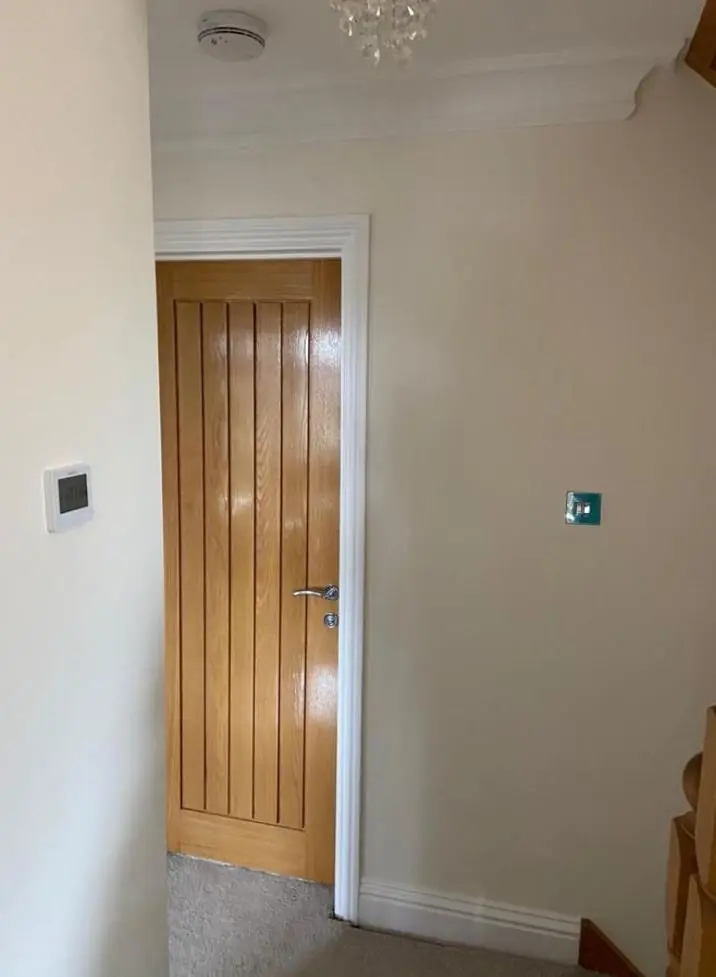
Most homes in Bozeat are not listed cottages. The three private estates built in the 1960s and 1970s, and the housing on the old Gola factory site that went up after 1999, have flush or moulded internal doors, machined skirtings and softwood architraves. On the newer houses some of that woodwork may still wear its original builder’s finish, often a thin coat that has yellowed or chipped after more than 20 years.
Here the job is quicker and more predictable: degrease, key, fill dents and open joints, caulk the gap where skirting meets wall, then two coats. Owners often choose a water-based satin, which stays white and dries fast enough to keep a hallway in use. Our main door and skirting painting page describes that sequence in more detail.
Which finish suits which house
| Woodwork | Typical Bozeat setting | Finish we would suggest |
|---|---|---|
| Leaded timber casements | Listed limestone cottages | Oil or alkyd system, hand-cut |
| Exposed wood lintels | Cottage and farmhouse fronts | Primer on bare timber, flexible exterior topcoat |
| Panelled farmhouse doors | Older farmhouses | Eggshell or traditional gloss after stripping failed layers |
| Flush doors and skirtings | 1960s-70s estates, post-1999 houses | Water-based satin |
Farmhouses here have irregular rooms and door frames that are rarely square, so Dean measures and prices the woodwork on site instead of quoting from photos. For what affects the price, see the painter and decorator cost guide. For the other work we cover in the village, visit our Bozeat area page.
Last updated by Dean, DH Painter & Decorator.