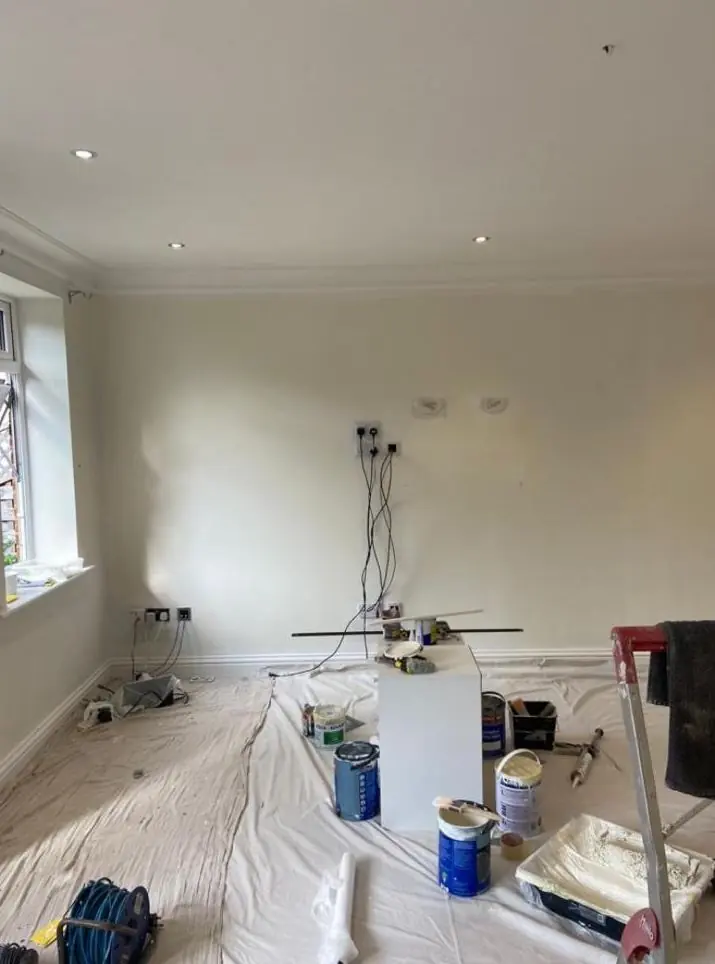
Dean paints the insides of Bozeat homes, travelling roughly 9.4 miles out from Northampton to the NN29 village near Wollaston. The village splits into old limestone cottages and farmhouses with thick, uneven walls and later estate houses with standard plaster, and each needs a different approach.
Two very different Bozeat interiors
Bozeat has almost 1,000 homes, and on the inside they fall into two groups. The older group is the limestone core: late 17th and 18th-century cottages and farmhouses along Dychurch Lane, Mile Street, High Street, Allens Hill and Easton Lane, many of them thatched, and home to most of the village’s sixteen listed buildings. The newer group runs from the private estates laid out in the 1960s and 70s to the houses on the former Bozeat Boot Company land, built after 1999.
Painting a bedroom in one group is a different job from painting a bedroom in the other. In the estate houses we are usually dealing with flat plaster or plasterboard, square corners and modern emulsions, so the work is about clean cutting-in and a durable finish. In the stone houses the walls are solid, often out of true, and may still carry older lime-based plaster, so the choice of paint matters as much as how it goes on. Our main interior painting service page covers the general preparation we do in every house. This page is about what changes in Bozeat.
Solid limestone walls and the paint they will accept
Coursed limestone walls have no cavity, so any moisture in them has to escape through the surface. A thick vinyl emulsion over an old lime plaster can hold that moisture in, and the result is blistering, flaking or a damp patch that keeps coming back. Before we paint one of these rooms we check what is already on the wall. Where the plaster is lime, or the old paint is a distemper, we use breathable mineral or clay-based paints rather than a standard contract matt.
Uneven walls also change how we prepare. Filling every undulation in a 1730s cottage to make it look like new plasterboard is rarely a good idea and can look wrong. We make good cracks and loose areas and leave the character of the wall alone. If the house is listed, works that affect its character can need listed building consent, so if you are planning anything beyond redecoration, such as removing old plaster, check with North Northamptonshire Council first.
Chimney breasts and ceilings from the solid-fuel years
Mains gas only reached Bozeat in 1990. Until then the older cottages may well have been heated by open fires and solid-fuel stoves, and that history can show when you start decorating. Soot and tar can bleed back through fresh emulsion on chimney breasts and the ceilings above them, sometimes years after the fire was last lit, as a brown or yellow stain.
The fix is a stain-blocking primer on the affected areas before any finish coats. Skipping it means the stain reappears within weeks. On a ceiling under a thatched roof we also look for old water marks, which need the same treatment once the cause has been dealt with.
Measuring large farmhouse and conversion rooms on site
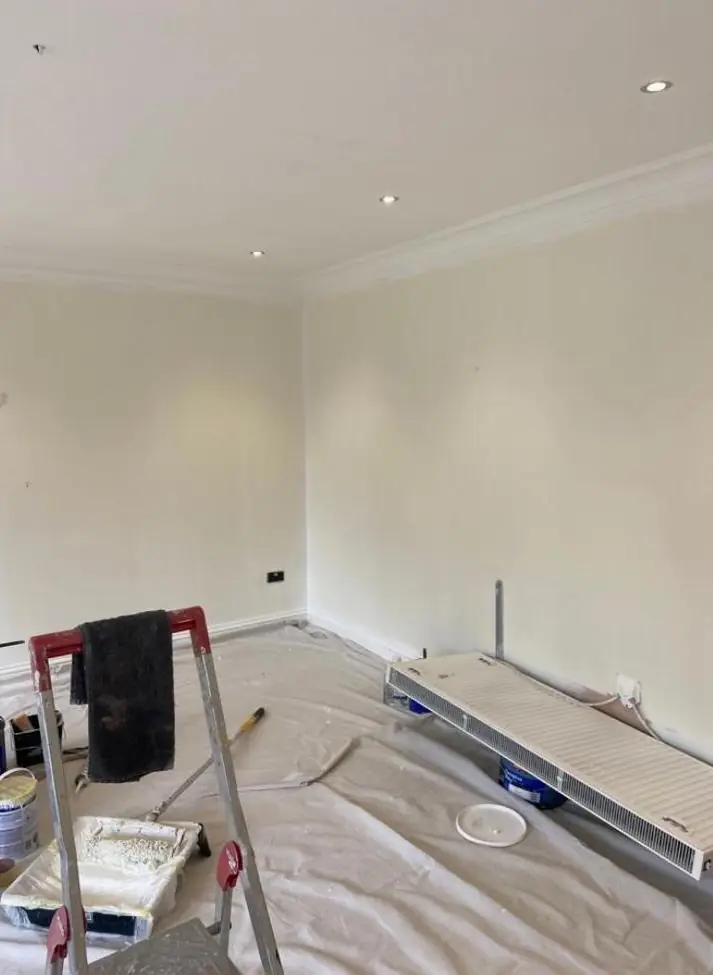
Some of the village’s older buildings are big and irregular. East Farmhouse on Dychurch Lane is listed with attached barns, Church Farmhouse on Mile Street dates from the late 17th century, and 42 High Street was once a public house. Rooms in buildings like these rarely match a standard size, with deep window reveals, sloping ceilings and walls of different heights in the same room. We don’t quote these from photos. Dean measures room by room on site so that the quote reflects the real surface area and the access needed. Our painter and decorator cost guide explains what drives the price.
Estate and Gola-site houses due their first full repaint
The houses built on the former Bozeat Boot Company site after 1999 are now more than twenty years old. Where a house still has its builder’s original finishes, expect thin trade emulsion on the walls, yellowing satinwood on the doors and skirtings, and settlement cracks along ceiling joins. A first full redecoration here usually means filling and caulking the cracks, sealing any patch repairs and then applying two proper coats.
On the 1960s and 1970s estate houses, decades of redecoration usually mean the work is more about stripping back failed layers on woodwork and dealing with old textured ceilings. You can find more about the village and the other work we cover there on our Bozeat area page.
Last updated by Dean, DH Painter & Decorator.