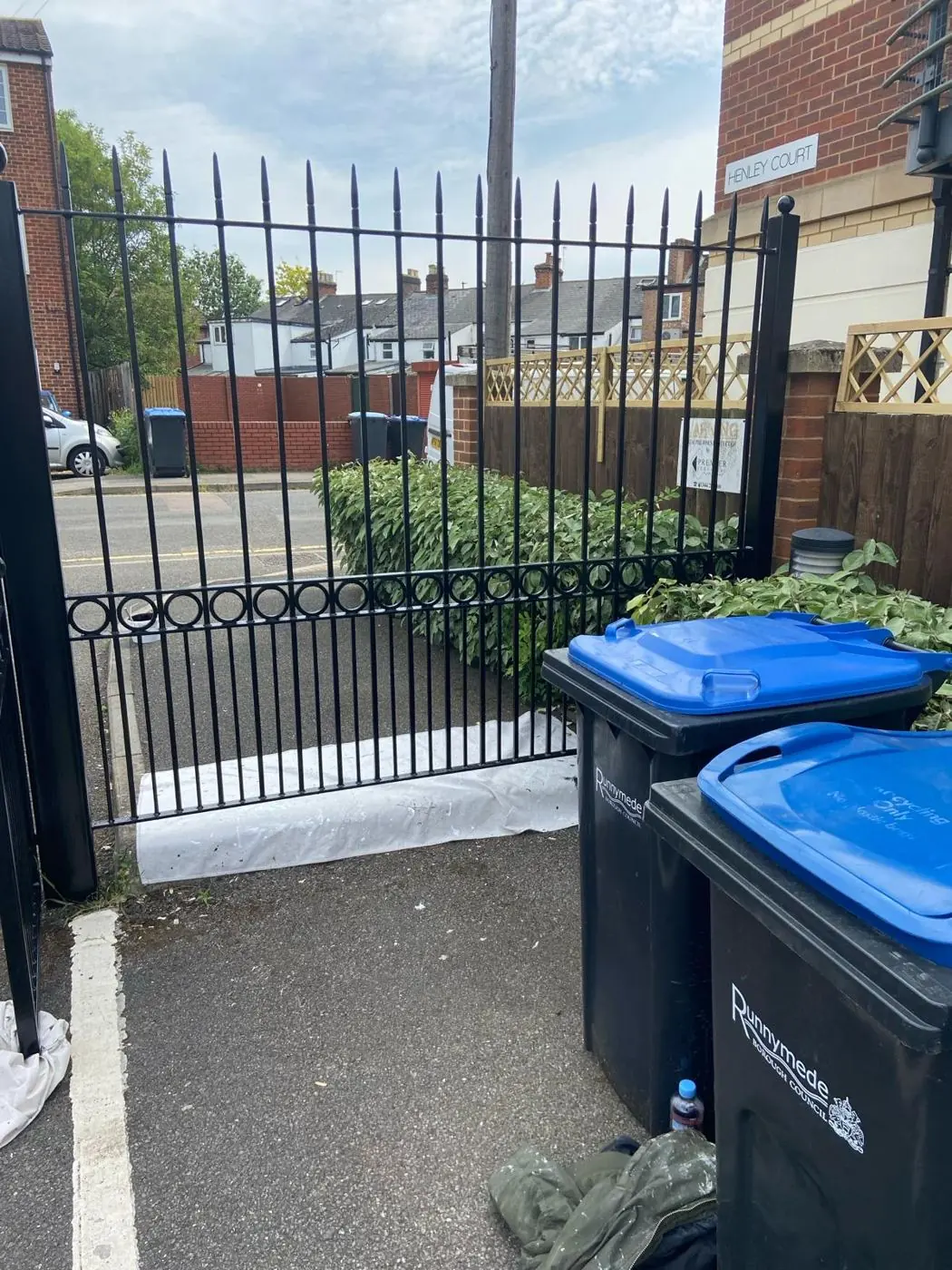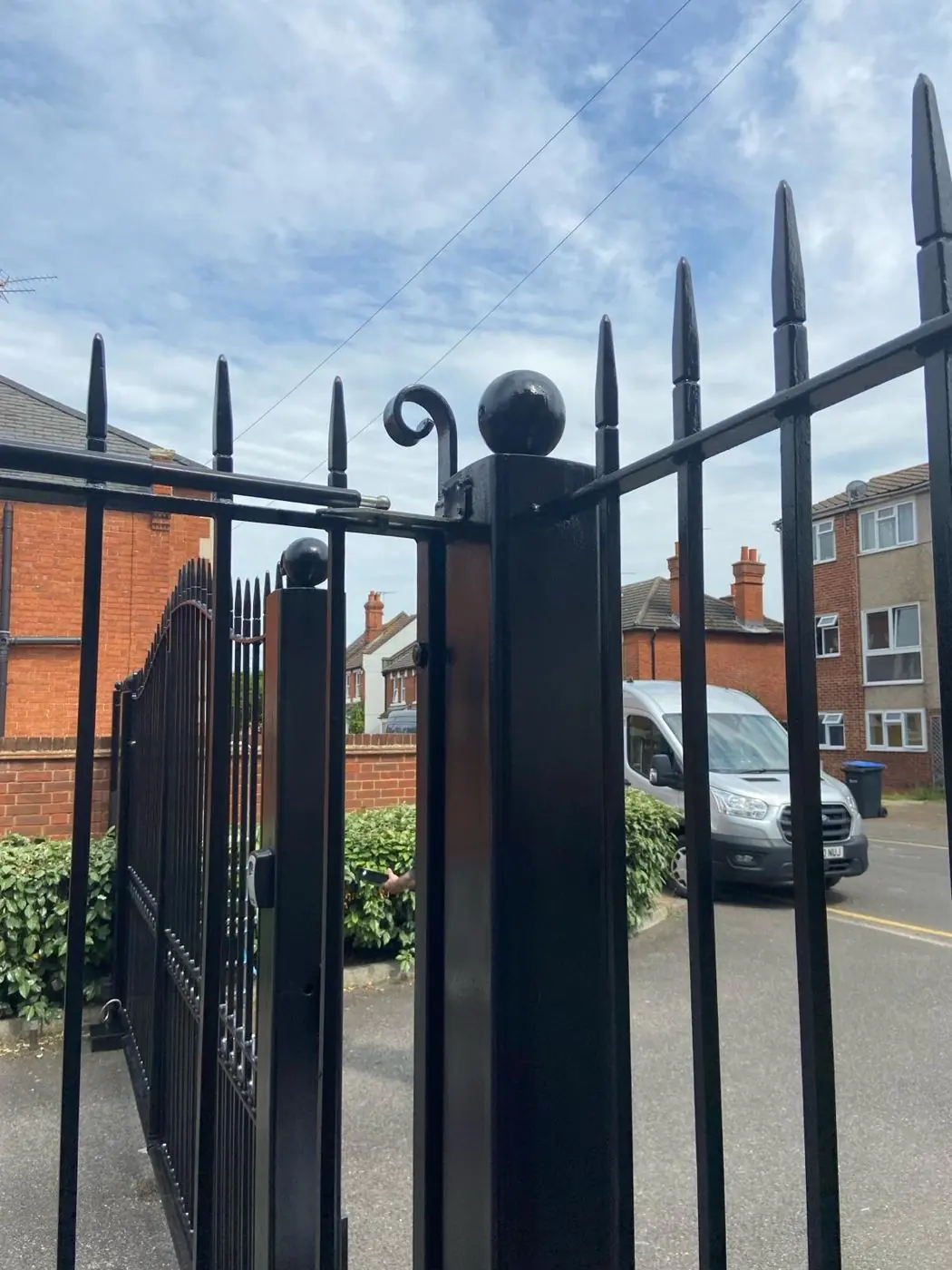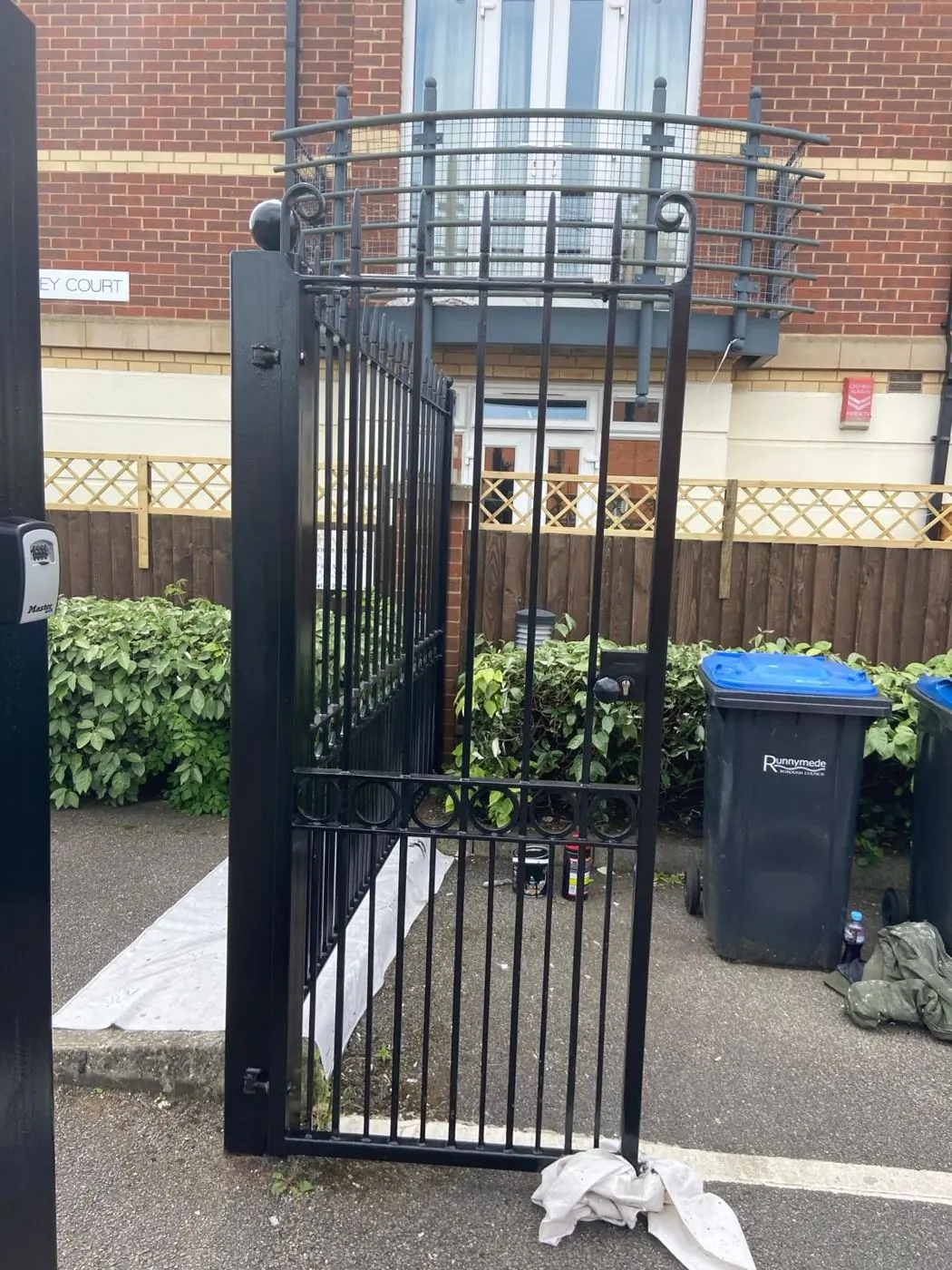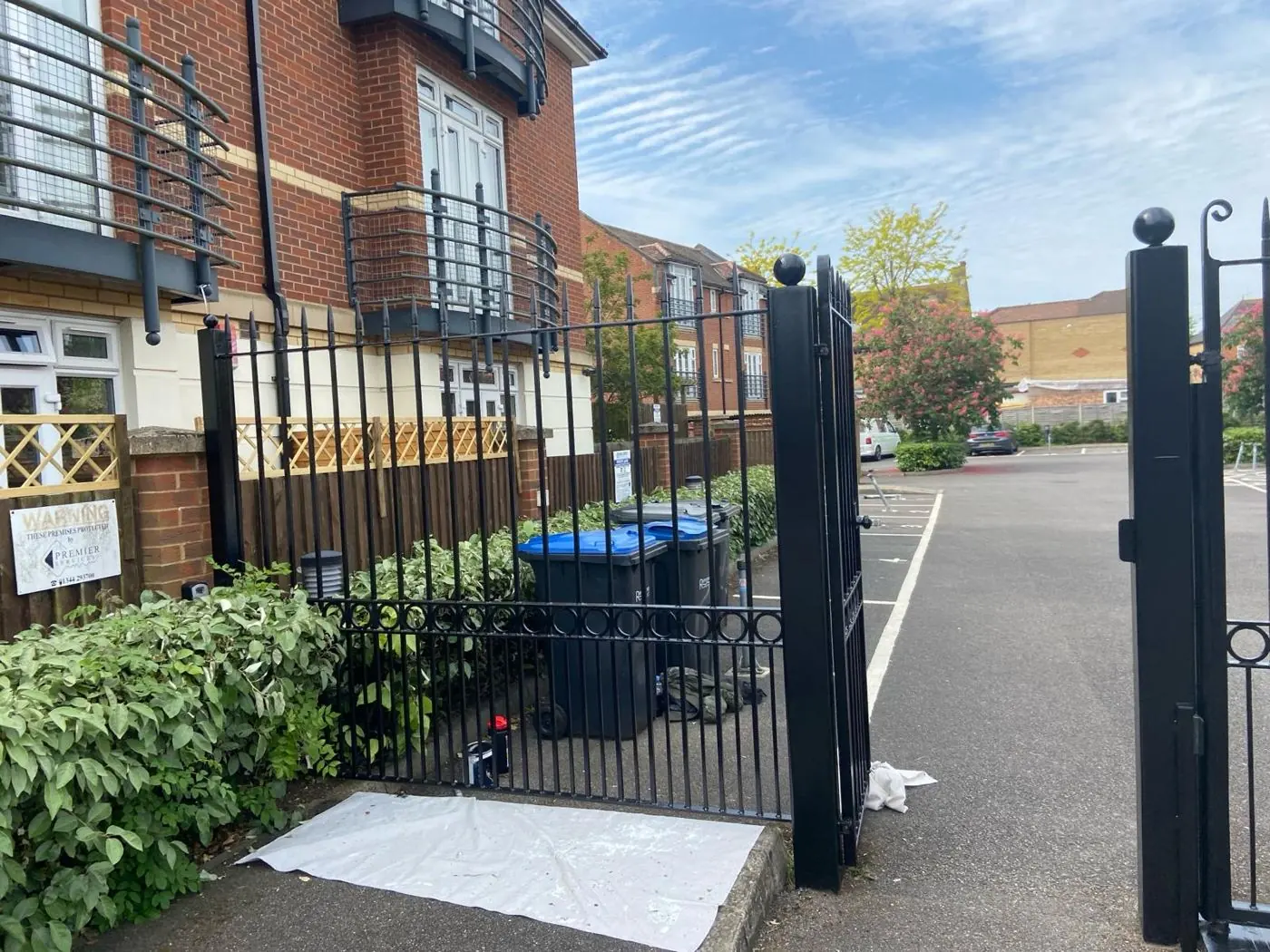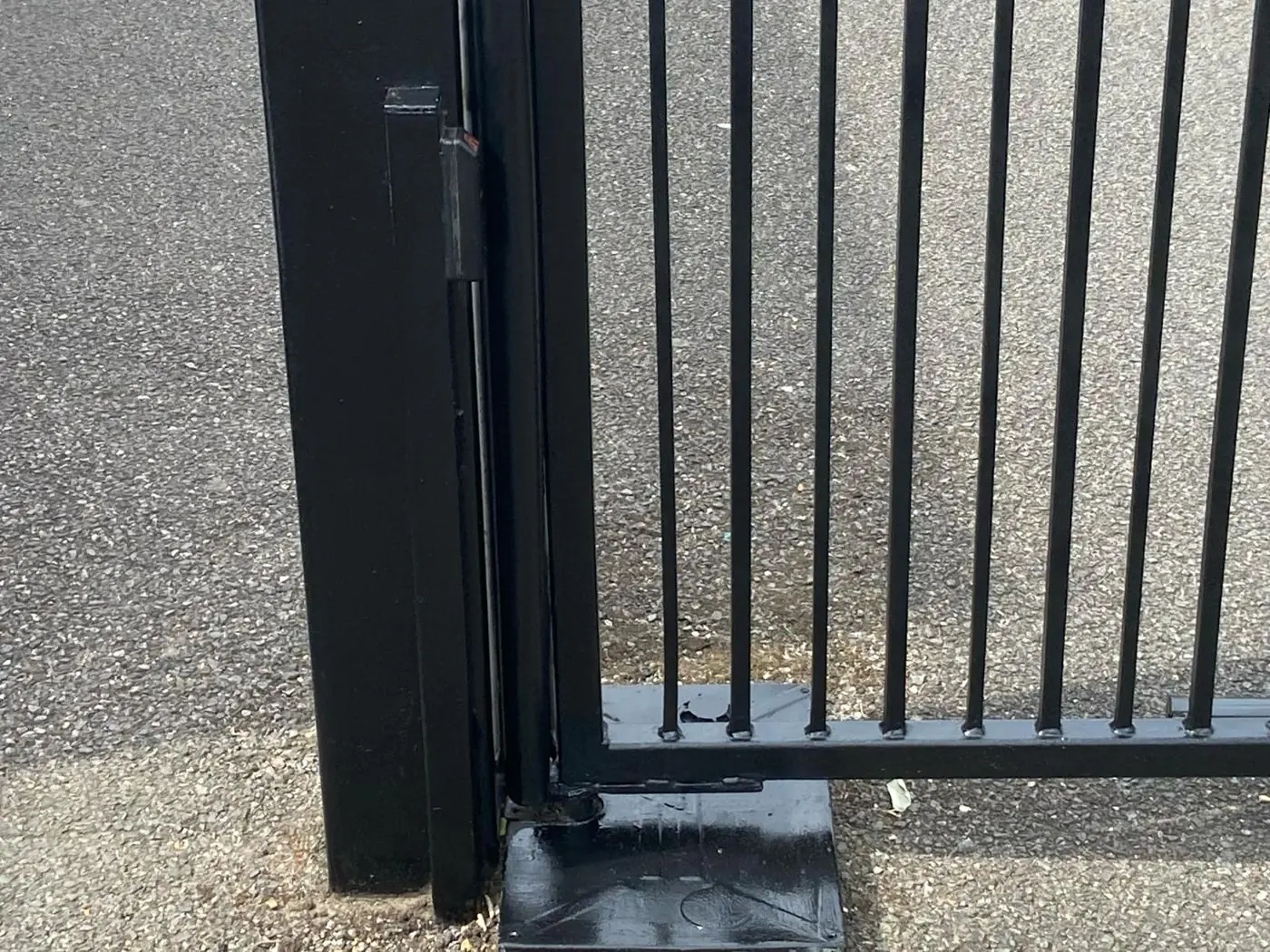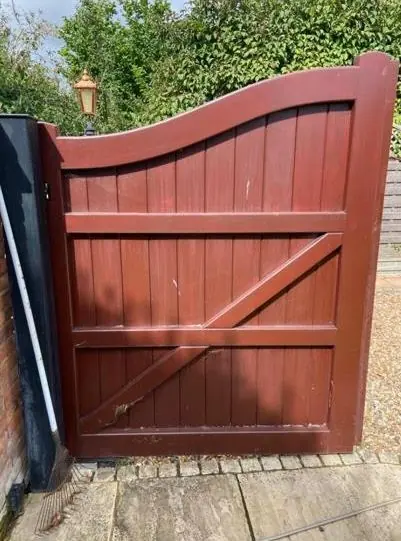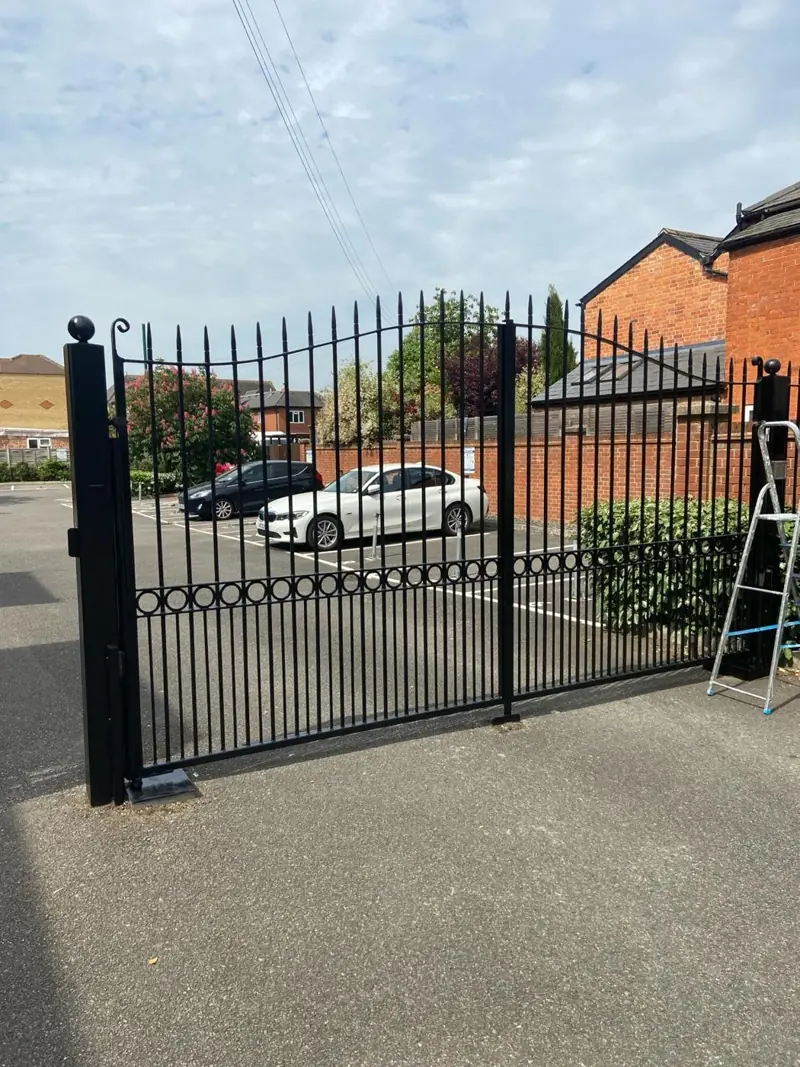
We paint metal gates, railings and other outdoor ironwork in Bozeat, about 9.4 miles east of Northampton in North Northamptonshire. Rust is taken back to sound metal and primed before any top coat, and the stone or brick around the ironwork is protected while we work.
Where ironwork turns up in the village
Bozeat is mostly a village of limestone cottages, farmhouses and post-war estates, so metal gates and railings are not on every street. Where they do appear, it tends to be on some of the older frontages and at farm entrances. Farm gates take knocks from vehicles and livestock, and frontage railings take splashing from the road, so both often have chipped coatings with rust spreading underneath. When we look at a gate or railing in Bozeat, we start by asking:
- Is it wrought iron, cast iron, mild steel or galvanised? Each needs a different primer.
- Is it set into stone, brick or concrete, and is rust at the fixing points pushing that apart?
- Do the hinges, latch and drop bolt still work, or are they seized with old paint?
- Is the gate hung so it can be painted in place, or would it be better lifted off?
Ironwork fixed into limestone
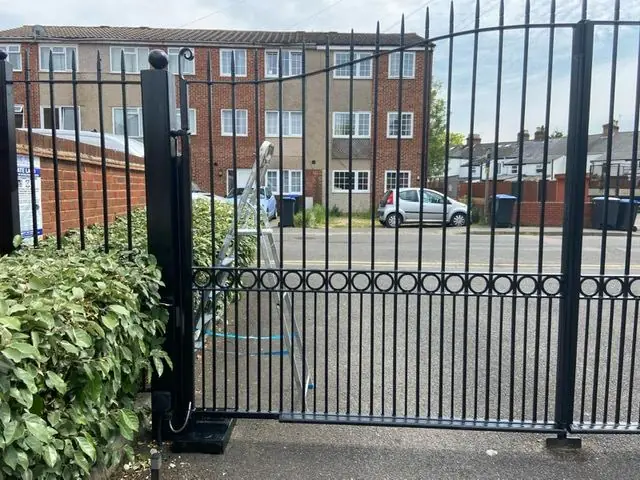
Older railings are often leaded or set straight into a stone plinth or wall. When iron rusts at the point where it enters the stone, it expands, and in time it can crack or spall the stone around it. With coursed limestone, which is common on Bozeat’s older houses, that damage is hard to put right, so the bases of the uprights get the most attention. We clean out the rust there as far as we can reach, prime the bare metal straight away and work the paint down into the joint. If the stone is already cracked or the fixings are loose, that is a repair for a stonemason, and we would say so rather than paint over it.
Limestone is also porous and marks easily. We mask and sheet the stone below and beside the ironwork, because a drip of black gloss on bare limestone soaks in and does not scrub off.
Farm entrances and large gates
Bozeat is ringed by farmland, and gates at its farm entrances are usually broad, made of steel tube or box section, and hung on heavy posts. These often fail first along the bottom rail and inside welded joints, where water and mud collect. We wire-brush or abrade back to bright metal at the rust spots, apply a rust-inhibiting metal primer, then build up an undercoat and a hard-wearing gloss. For a gate that sees daily use, we suggest a colour that hides scuffs and is easy to touch in. Galvanised gates need a primer made for zinc, or the paint will peel off in sheets.
The village lies beside the A509, and a gate or railing close to a busy road picks up a film of road grime that stops paint bonding. Every metal surface is washed and degreased before we sand or prime it. On a farm gate we also check that the hanging post is still upright, because a gate that drags on the ground will scrape new paint off its bottom rail within weeks.
Colour and listed frontages
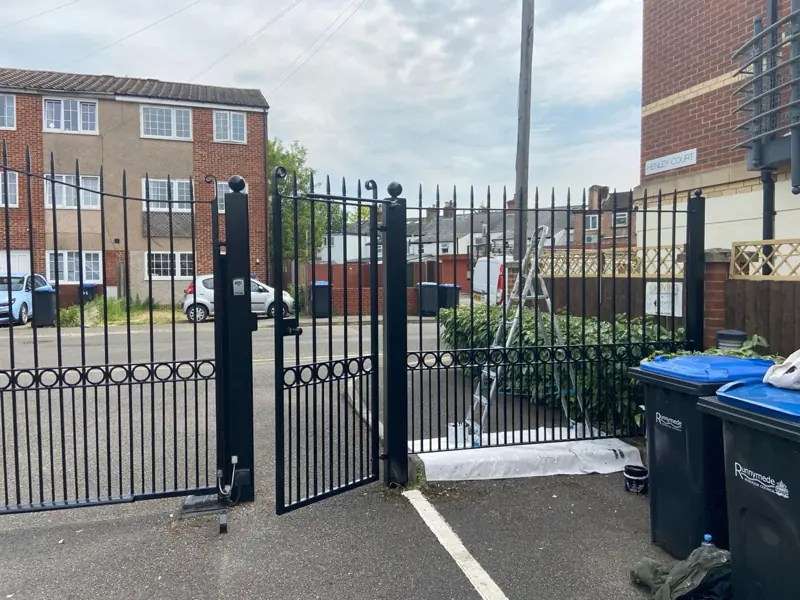
Against Bozeat’s coursed limestone, black remains the usual choice for railings, with dark greens and greys as alternatives. If railings belong to one of Bozeat’s sixteen listed buildings, we keep to the existing colour unless you have checked a change with North Northamptonshire Council. The full preparation sequence, including how we treat each type of metal, is on our main metal gate and railing painting page. For walls, woodwork and other work in the village, see the Bozeat page, and for planning costs our painter and decorator cost guide.
Last updated by Dean, DH Painter & Decorator.