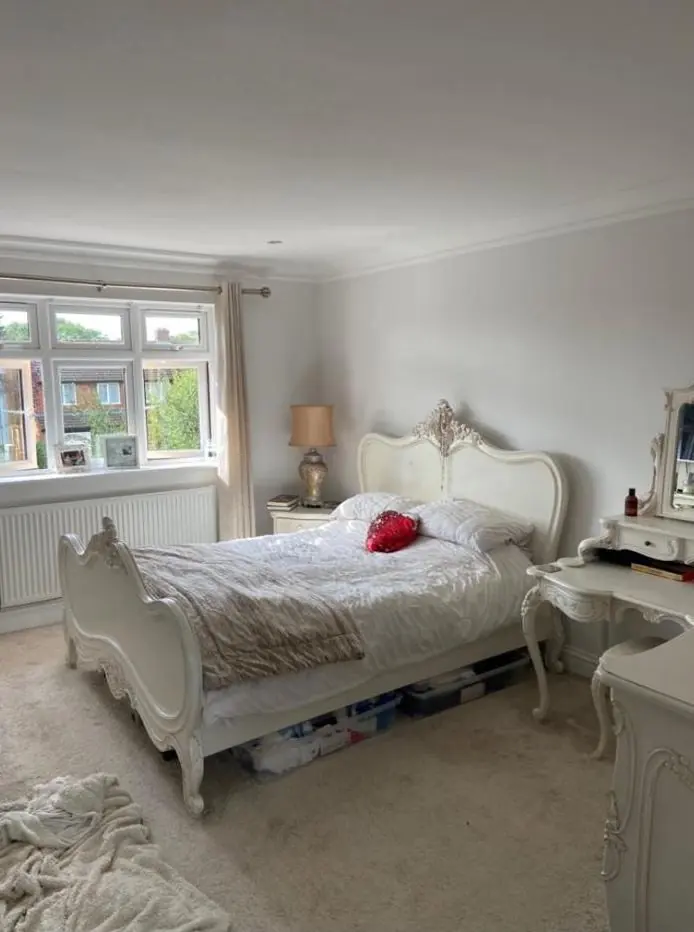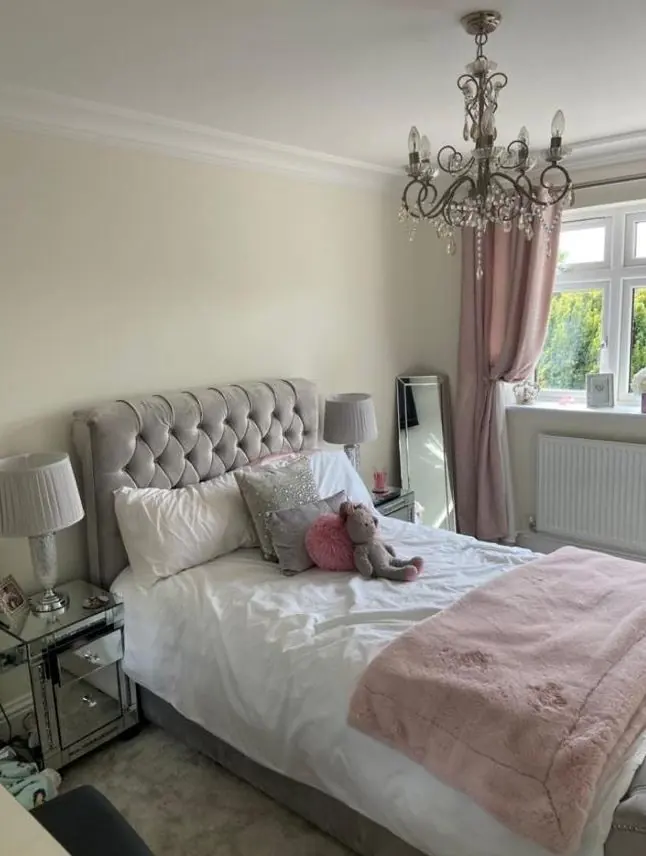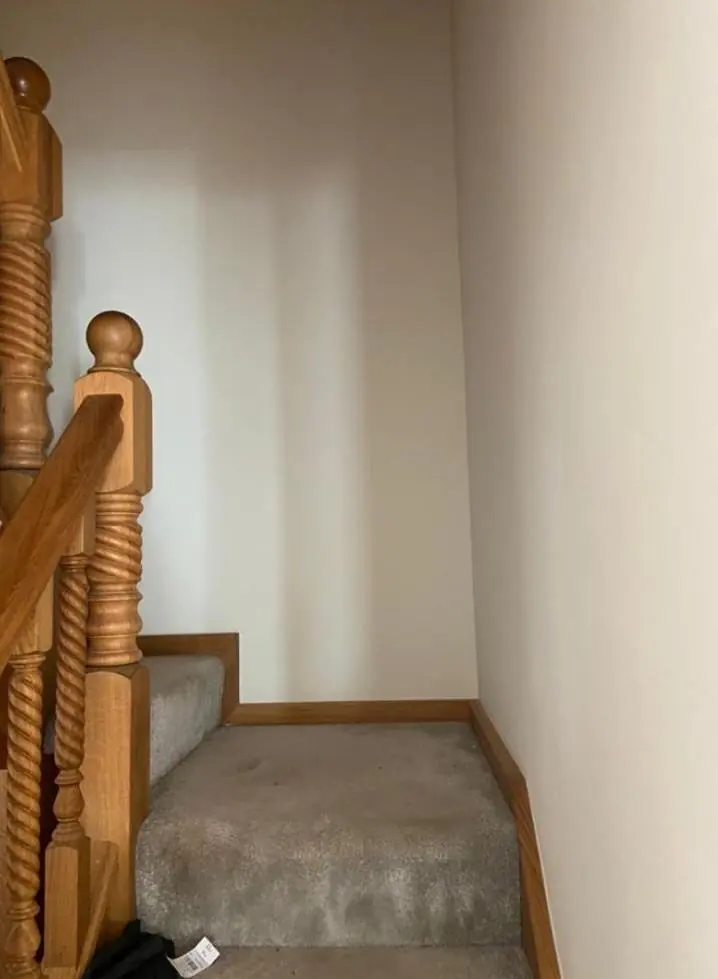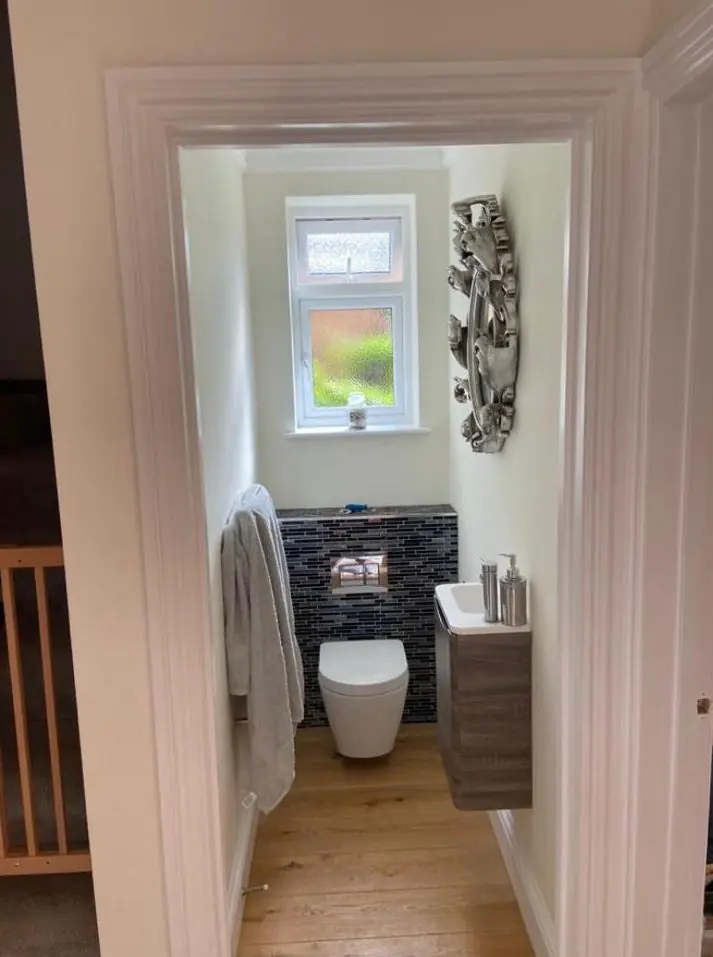
We hang wallpaper in Bozeat, the North Northamptonshire village about 9.4 miles east of Northampton. In the old limestone cottages that means lining first and choosing patterns that forgive out-of-true walls. In the estate houses, sound plaster usually takes paper directly after sizing.
Why a straight pattern fights a 1740s wall
Several of Bozeat’s listed houses carry datestones from the years after the Great Fire of 1729: 29 Mile Street is dated 1731 and 42 High Street 1743. Inside houses of that age the walls are built of coursed limestone and were never meant to be flat. They lean, they bow between corners and the ceiling line wanders. A tight geometric paper or a bold vertical stripe shows every one of those faults, because the eye reads the pattern against the ceiling and the door frames, and neither is straight.
So in the older houses we usually steer people toward papers that forgive: small all-over prints, organic trails, textured plains or a free match where the pattern does not have to line up length to length. If you have your heart set on a stripe, we will talk through where the drift will show and how we would split it so it lands in the least visible corner.
Lining paper over old stone and plaster
On solid stone walls we nearly always hang a lining paper first. It bridges hairline cracks in old plaster, evens out suction across patches of different age and gives the decorative paper a consistent surface to grip. On particularly rough walls we may cross-line, hanging the lining horizontally so its joints never coincide with the joints of the top paper.
Moisture matters here too. These walls have no cavity, and a vinyl paper on an outside wall of a limestone cottage can trap damp behind it. Where a wall shows any sign of damp we would sooner use a breathable paper, or recommend sorting the cause before papering at all.
Stripping layers in a house decorated for three centuries
Old Bozeat houses have often been papered and painted many times over. We often find painted-over papers, lining glued straight onto distemper, and patches of plaster that come away with the paper. We strip by steam and hand scraper, then judge what is left. Loose plaster gets made good before anything else goes up. Where the stripping exposes original lime plaster we fill with compatible materials, not gypsum filler, which can fall out of lime in time. On a listed building, removing historic plaster is a different matter from stripping paper, and that may need consent from North Northamptonshire Council.
Papering in the newer estates
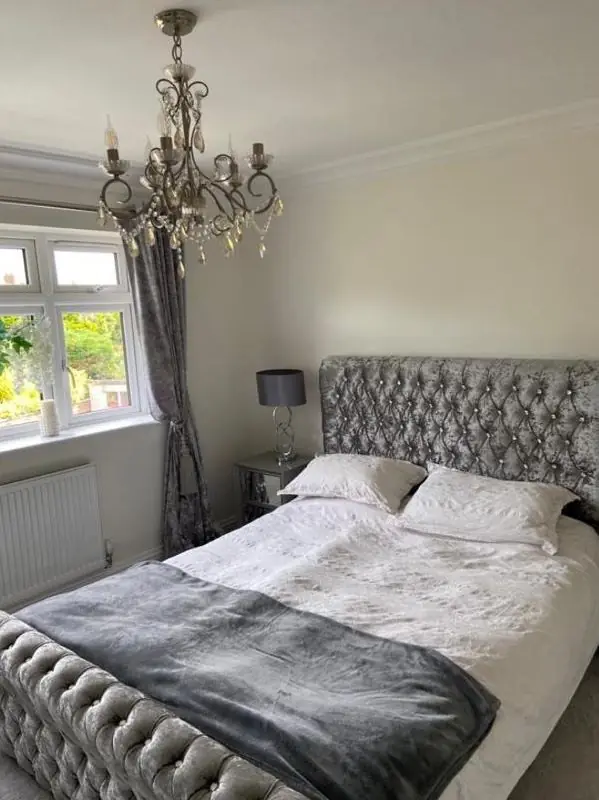
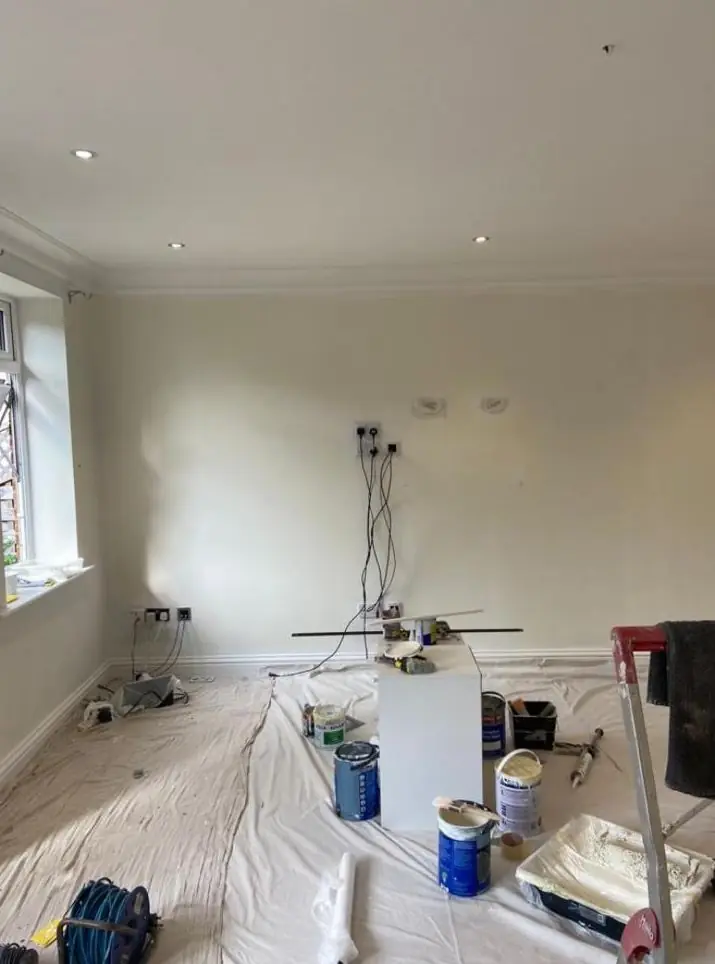
The three private estates from the 1960s and 1970s and the houses built on the old Gola factory site after 1999 are a simpler proposition. Plaster is generally sound and flat, corners are close to square, and a well-sized wall will take a heavy designer paper directly without lining. That makes these houses a good fit for feature walls, chimney breasts and stair walls in larger-scale patterns. The post-1999 houses especially may never have been papered, and new plaster that was only ever emulsioned needs sizing before paper goes on so it slides into place and dries evenly.
Our wallpaper hanging service page covers the full process from stripping to the last trim. For more on the village’s houses and the other decorating we do there, see our Bozeat page. If you are comparing decorators, our guide on how to choose a painter and decorator sets out the questions worth asking.
Last updated by Dean, DH Painter & Decorator.