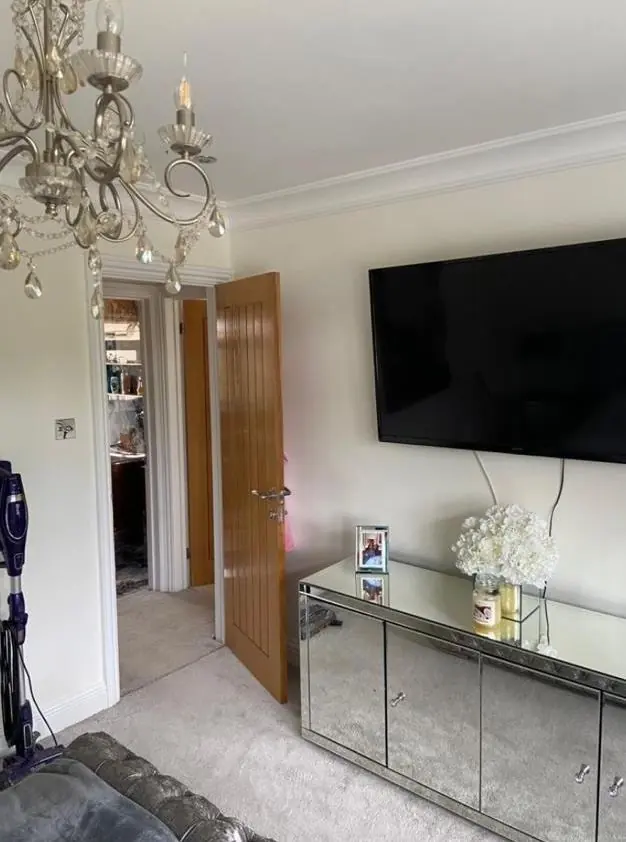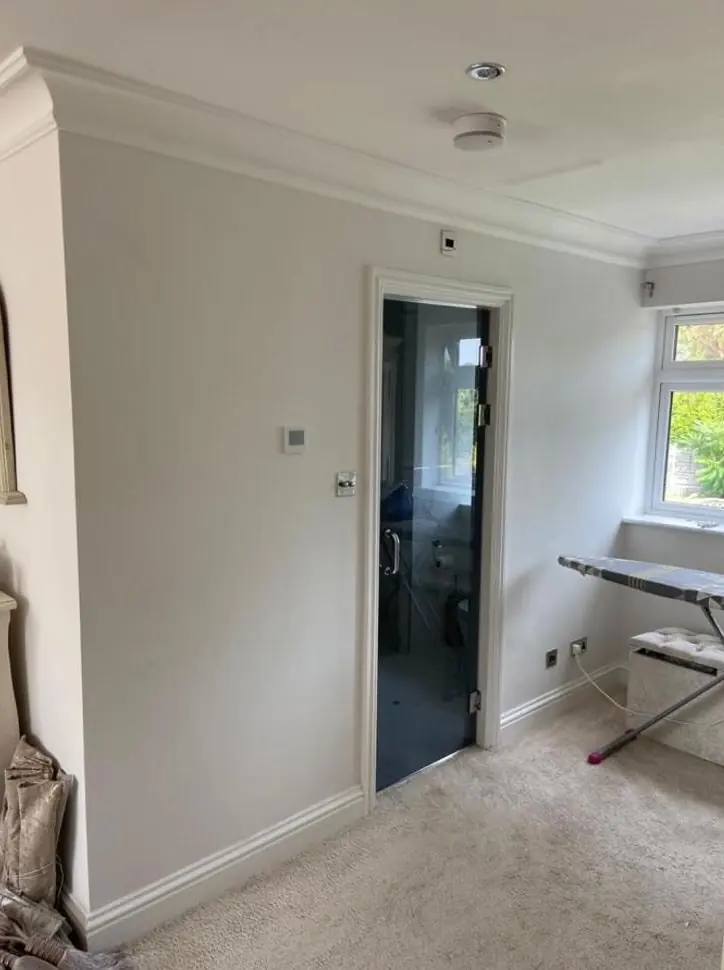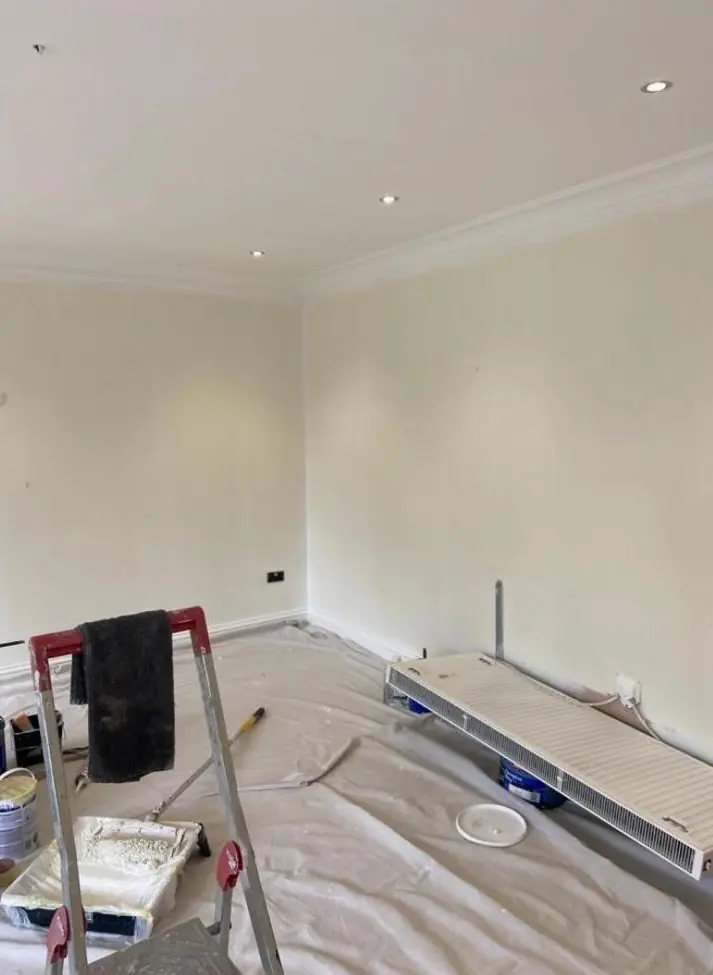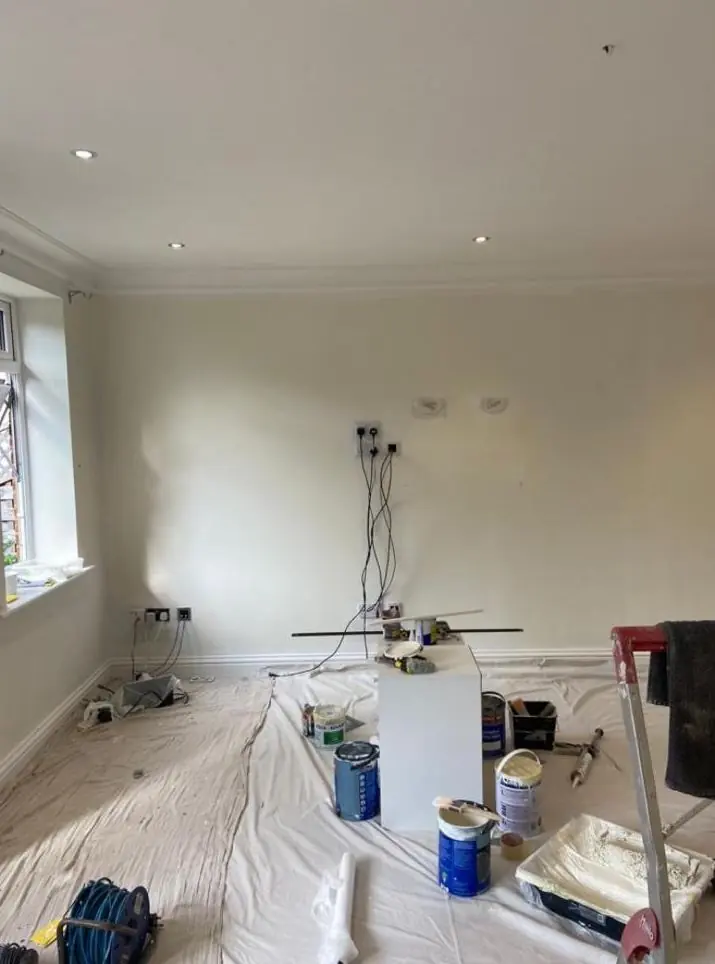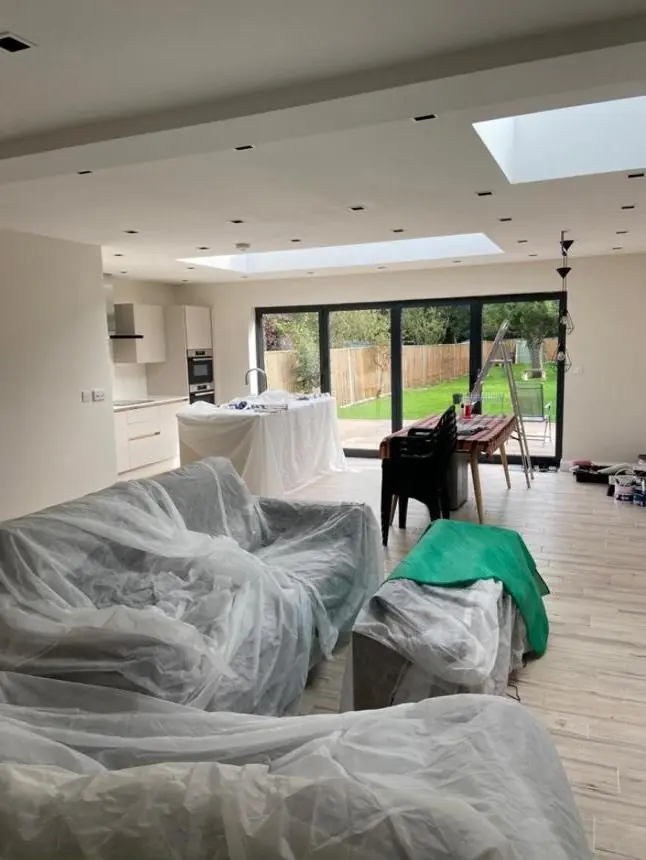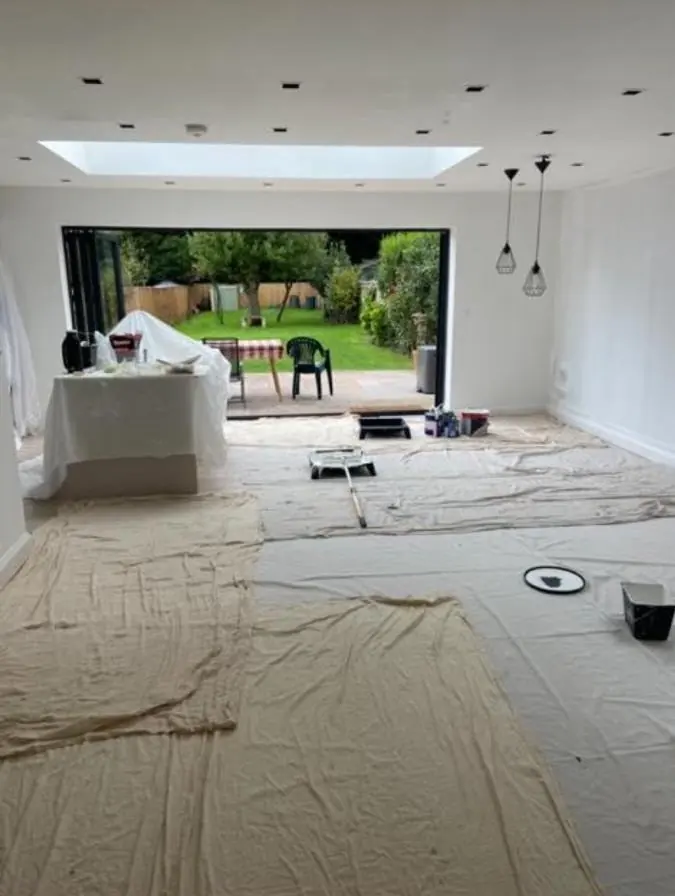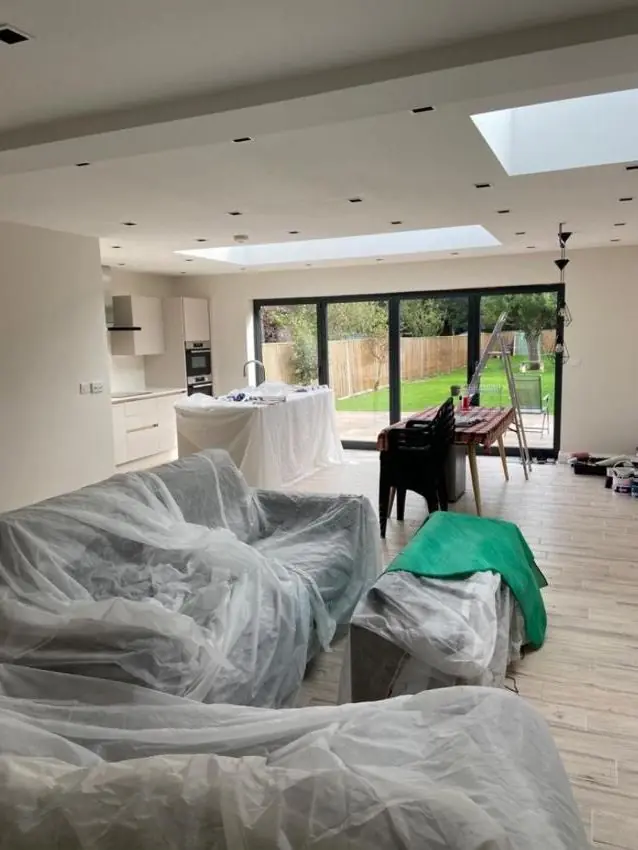
Dean decorates new plaster, extensions and converted outbuildings in Bozeat, about 9.4 miles east of Northampton. The work ranges from a re-skimmed bedroom in an estate house to an extension or barn conversion on an older limestone plot, where the join between new plaster and old stone needs a different paint from the rest of the room.
Old stone plots, new rooms
Several of Bozeat’s listed buildings are farmhouses. East Farmhouse on Dychurch Lane is listed with its attached barns, Town Farmhouse and Manor Farmhouse stand on the same lane, and Church Farmhouse is on Mile Street. The listings also record some former farm buildings among the old houses. When a barn, outbuilding or rear wing is brought into use as living space, most of the new interior is fresh plaster on top of solid limestone walls, while modern extensions on the 1960s-70s estates are usually block and plasterboard.
Those are two different decorating jobs. A plasterboard extension is about drying times and a good mist coat. A converted stone building is about letting the old wall breathe, and that affects every coat.
Where new plaster meets limestone
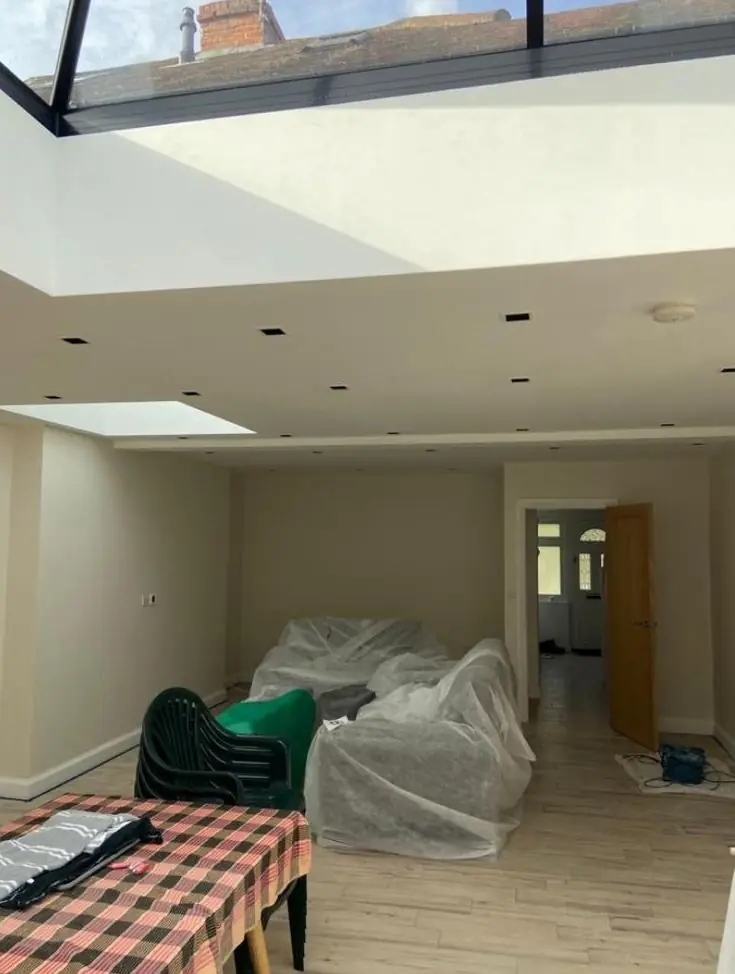
Limestone walls take up moisture and release it through the face. If a plasterer has used lime plaster on the old walls of a conversion, sealing it under a plastic vinyl emulsion traps damp in the wall and can lead to blistering, salts and mould. We match the paint to the plaster:
- Gypsum skim on new blockwork or plasterboard: a thinned contract matt or proprietary mist coat, then two finish coats.
- Lime plaster on old stone: a breathable mineral or clay-based paint, with no vinyl in the system at all.
- The junction between the two: often a crack line as the materials move differently. We fill it with a flexible product and paint the whole wall in the breathable system so it reads as one surface.
We ask the builder or plasterer what went on the walls before choosing a paint. If nobody knows, we test a patch: lime plaster is softer, often slightly off-white, and absorbs water quickly compared with a gypsum skim.
Drying time in a converted building
New plaster has to be dry before it is painted, and in a thick-walled stone conversion that can take longer than people expect. Gypsum skim over plasterboard may be ready in a week or two in a heated room. Lime plaster on solid stone dries far more slowly, and a cold barn with no heating yet will hold moisture for weeks. Dark patches, a cold feel and a pinkish colour mean it is not ready. We check every wall, including reveals and behind where radiators will go, and would rather move the start date than paint over damp. The full method is in our guide to mist coats on new plaster.
Listed buildings and the extension around them
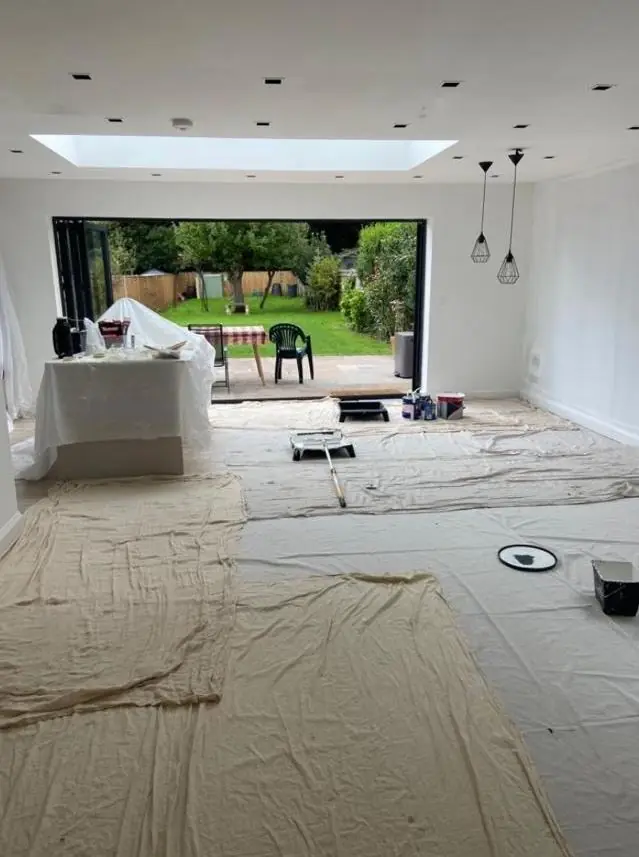
Bozeat has sixteen listed buildings. Extending or converting any of them, or a building attached to one, normally involves listed building consent from North Northamptonshire Council, and the approved drawings or conditions may name finishes. We follow what has been agreed and do not change it. On unlisted houses the choice of colour and sheen is yours.
New woodwork comes into most extensions as well: skirtings, architraves, doors and window boards that arrive bare or only factory-primed. We knot, prime and seal the end grain, caulk the joints to the new walls, then apply the finish coats, so the new room and the old house match.
Our main new plaster and extension painting page sets out what a typical quote includes. Because Bozeat is 9.4 miles from Northampton, it helps to book the decorating once the plasterer has a firm finish date, so we can allow drying time and come out for a continuous run of days. For other decorating we cover in the village, see the Bozeat area page.
Last updated by Dean, DH Painter & Decorator.