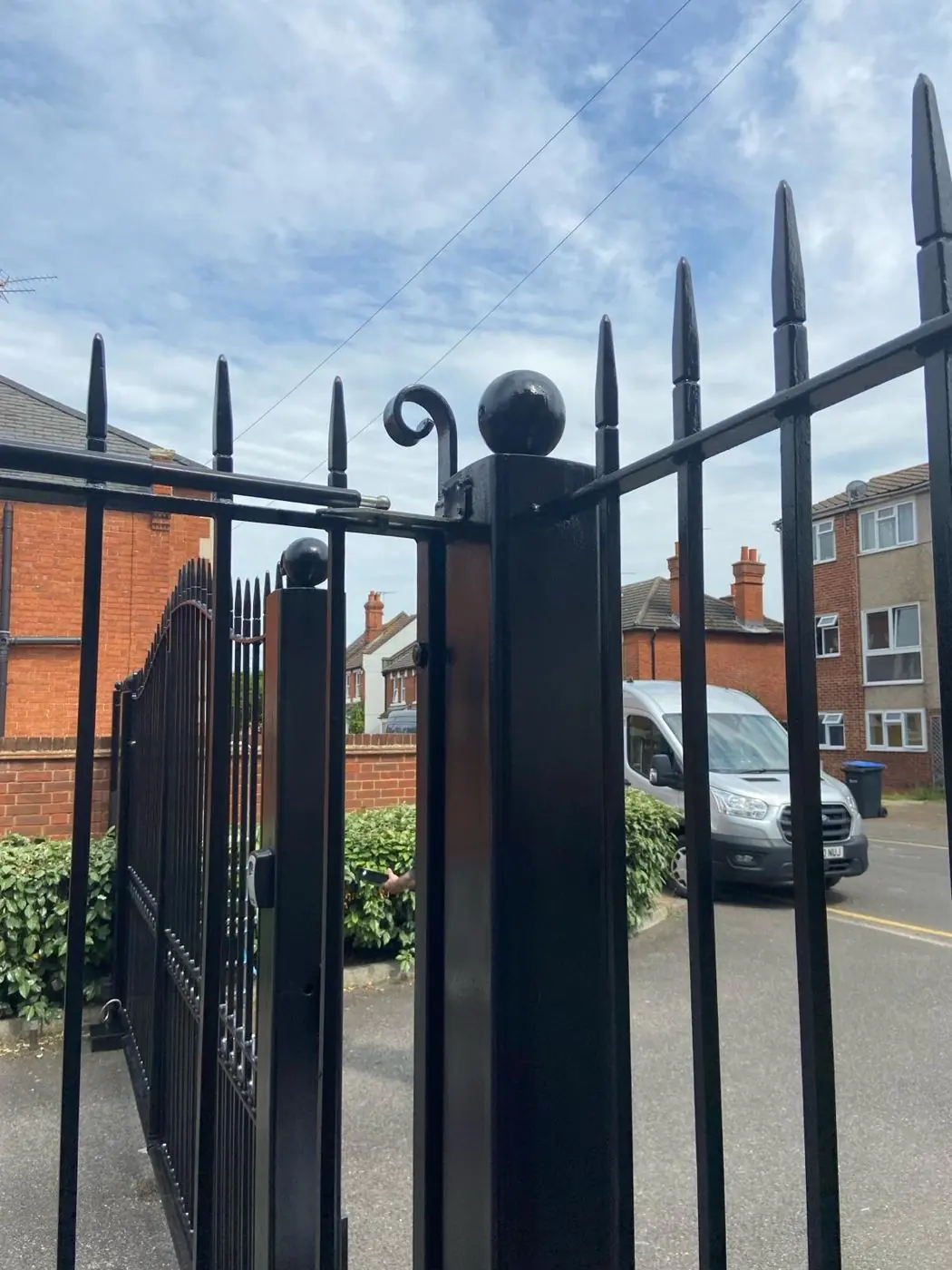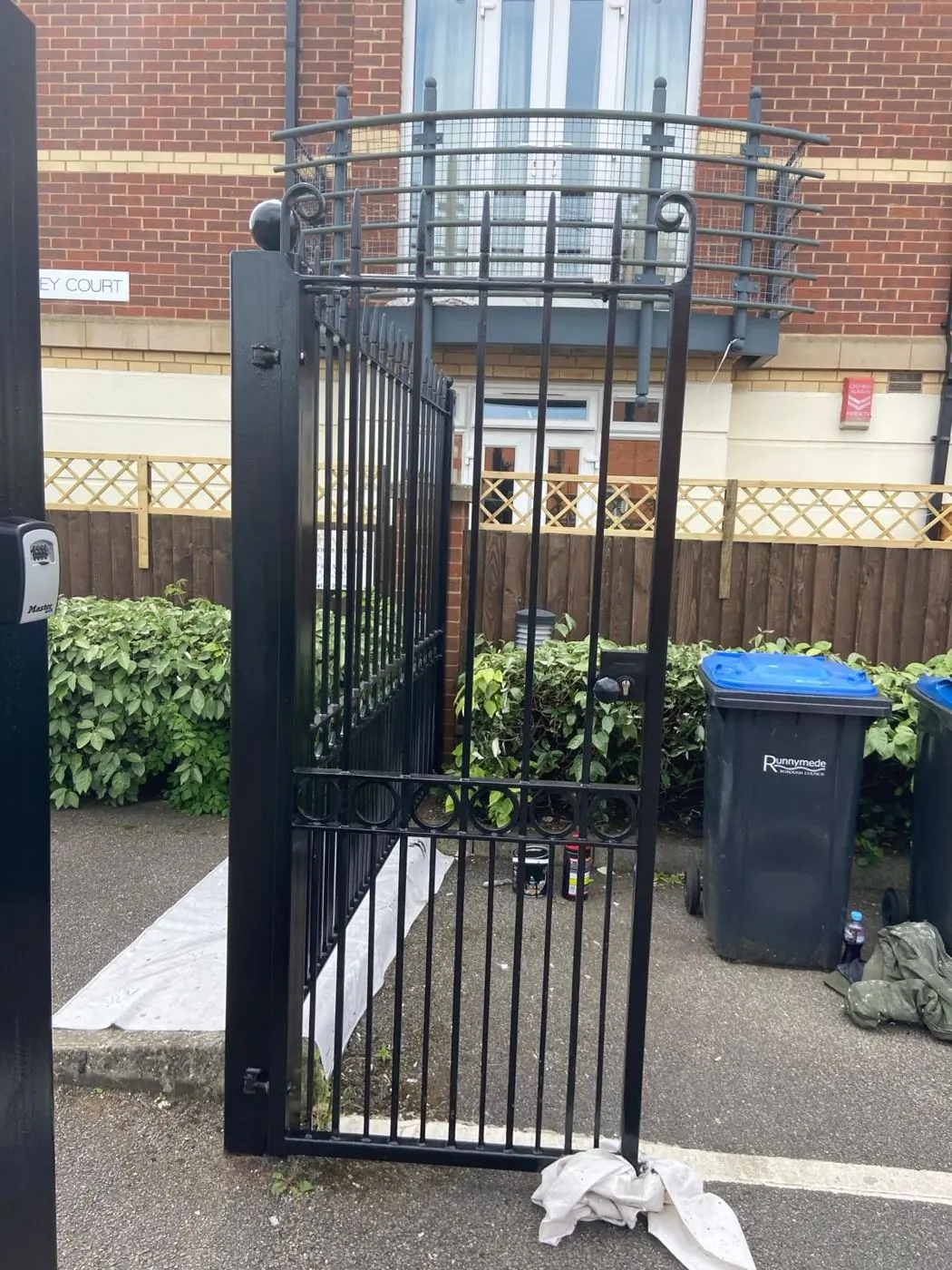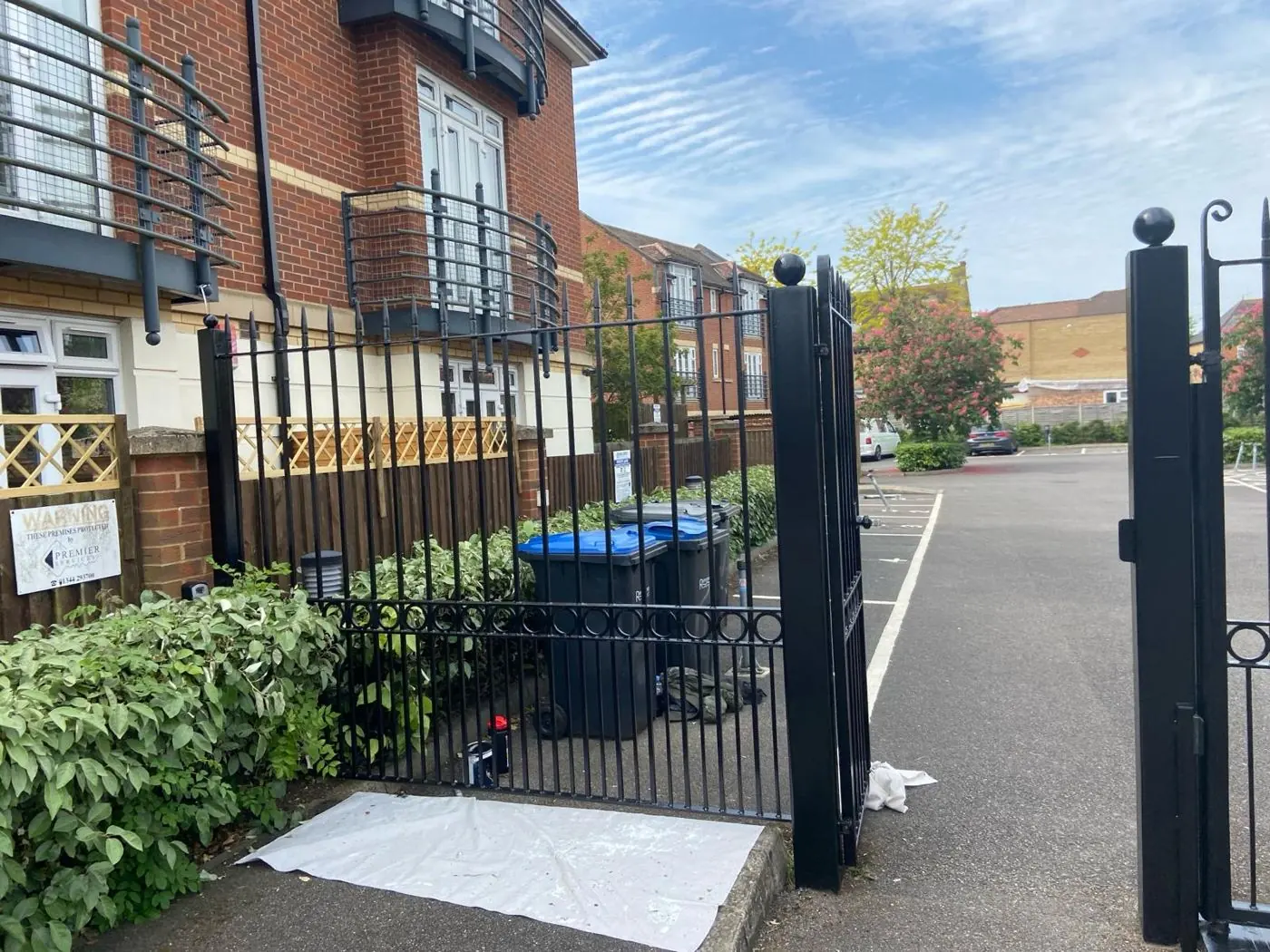
DH Painter & Decorator stains and paints fences, gates and garden timber in Bozeat, a farming-edge village about 9.4 miles east of Northampton. Dean looks at how exposed the boundary is and what the timber is before recommending a stain or an opaque finish.
Boundaries that face open fields
Bozeat sits on the edge of North Northamptonshire with farmland on every side, so plenty of gardens on the outskirts of the village back straight onto fields. Those back fences are often longer than an ordinary garden boundary, and with nothing to shelter them they take the wind and rain head on. Timber on an exposed run greys and dries out faster than a fence between two gardens, and the boards on the field side are the hardest to reach.
Before quoting, we walk the full length of the fence and ask how the far side can be reached. If the outside face can only be done from a neighbouring field, the landowner has to agree to access, and we would rather sort that out before the job is booked than on the day. Where only one face can be reached, we stain that face and the tops of the boards and posts.
Posts and gravel boards matter as much as the panels on these runs. Water splashes up from bare soil and crop margins, so the bottom few inches of a field-side fence stay damp longest. We pay extra attention to the end grain at the top of each post and to the base of every board, where a stain soaks in more slowly and is needed most.
Timber field gates and farmhouse entrances
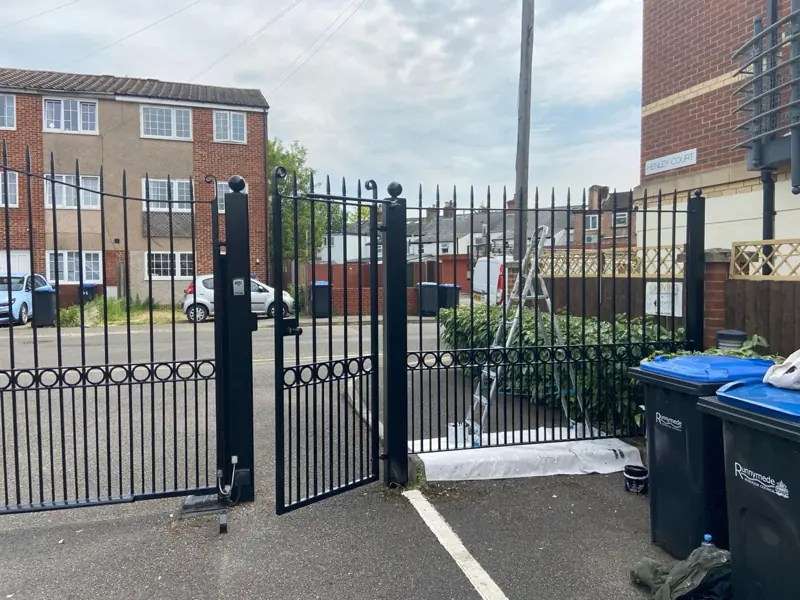
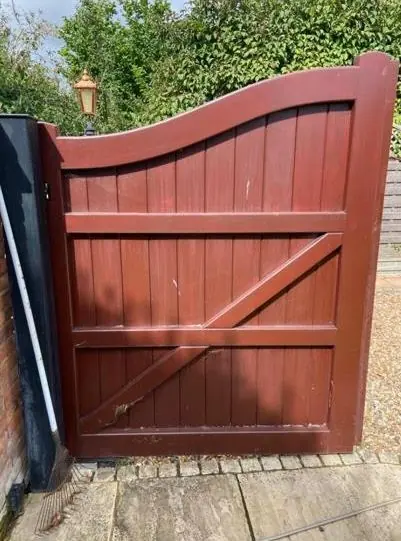
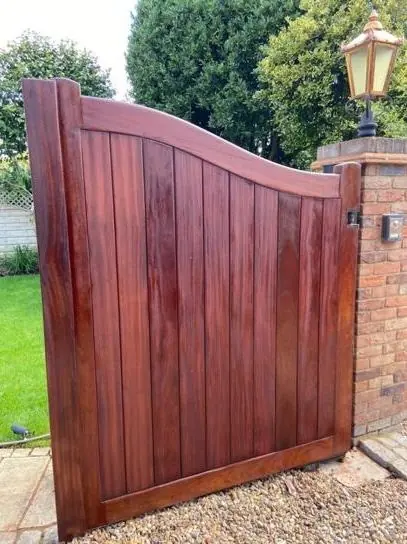
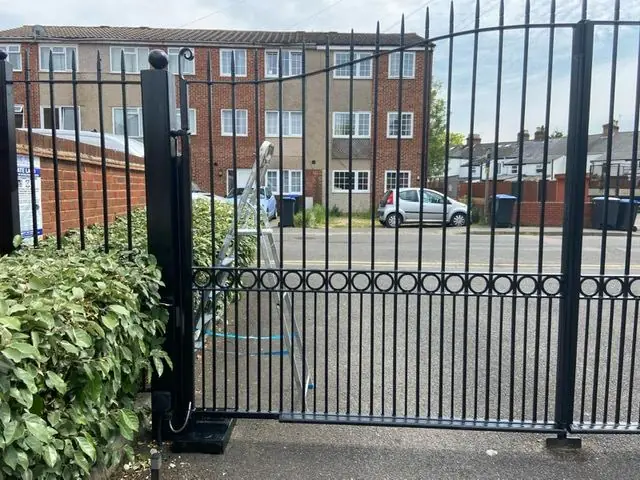
The old village includes several listed farmhouses, among them Church Farmhouse on Mile Street and East Farmhouse on Dychurch Lane, which is listed with its attached barns. Farmhouse plots and outbuildings tend to have wide timber gates, often in heavier section than a garden gate, with ledges and braces that collect water. Our approach to these:
- Clean off green growth and lichen, and let the timber dry fully.
- Check the bottom rail, the joints and the hanging stile for soft wood, which is where field gates rot first.
- Rub down raised grain, then work a penetrating stain or a microporous finish into every face, including the top edges where rain sits.
- Free off and oil the ironmongery, and prime any rusty hinges or latches before the timber finish goes on.
Choosing a colour next to old limestone
A gate or fence in front of a coursed limestone cottage is seen alongside the stone, so a warm natural stain or a muted heritage colour usually sits better than a strong modern shade. If the house is one of Bozeat’s sixteen listed buildings, boundary structures connected to it can come under the listing as well. We suggest checking with North Northamptonshire Council before a marked colour change on a gate or fence that belongs to a listed property. Fences on the 1960s and 1970s estates, and around the houses on the old Gola factory site, carry no such restrictions in the sources we use.
When to book
New pressure-treated fencing holds a lot of moisture, so it usually needs to dry out for a while before it is stained, following the product guidance. Older fences need a run of dry days so the timber is dry right through when the finish goes on. As the village is about 9.4 miles from our Northampton base, we book fence work in a settled spell and aim to finish a run in one go. Our seasonal timing guide explains the conditions we look for. The difference between stains, fence paints and oils is covered on our main fence and gate staining page, and other work in the village is on the Bozeat page.
Last updated by Dean, DH Painter & Decorator.