DH Painter & Decorator paints interiors in Gayton, an NN7 village just under five miles from Northampton town centre. Dean works on both the older limestone houses in the conservation area, which usually need breathable paints and slow work around beams, and the recent infill homes, where new plaster needs a mist coat.
Two kinds of house on one ridge
Gayton sits on a sandstone ridge south-west of Northampton, and for interior work its housing falls into two groups. The historic core around High Street, Baker Street and Deans Row is 17th- and 18th-century limestone, often two storeys plus an attic. Between and around those houses, infill and brownfield redevelopment has added a run of high-value new homes: 13 had been completed by February 2026, with permission for 12 more, including a barn conversion. Both get painted with a brush and roller, but the preparation, the paint and the pace are different.
We cover Gayton by van from our Northampton base. The general method we follow in every room is set out on our interior painting page. This page covers what Gayton’s own houses ask for.
Beams, stone fireplaces and walls that are never flat
The older farmhouses and village houses have walls of coursed limestone rubble behind the plaster, and many rooms have moulded spine beams and stone fireplaces. Lime plaster on solid stone needs to release moisture through its surface. A modern vinyl emulsion seals that surface, and the moisture it traps can show up later as flaking or blown patches. On these walls Dean will usually suggest a breathable mineral or clay-based emulsion in a flat or matt finish, which also hides the gentle undulation of old plaster better than a sheen does.
The beams take the most time. Cutting a clean line where plaster meets an uneven timber edge is slow brush work. Any old distemper or limewash on a ceiling or beam has to be identified first, because new emulsion will not hold on it and has to come off or be properly sealed. Things that typically add time in an older Gayton room:
- Old distemper on ceilings that has to be washed back before repainting
- Undulating lime plaster that shows every change in sheen
- Beams and stone surrounds that need sharp, hand-cut edges
- Attic rooms with sloping ceilings and small gabled dormers
Stone fireplace surrounds are masked and protected rather than painted, unless they already carry paint and you want them kept that way.
Listed houses: what to check first
Inside the conservation area stand the Grade I Gayton Manor and Grade II houses such as The Weir on High Street, Evergreen Farmhouse, Home Farmhouse on Baker Street and Beech House on Deans Row. A listing covers the inside of a building as well as the outside. Repainting a room in the same kind of finish is normally straightforward. Stripping historic paint, painting over panelling or switching to another kind of finish can require consent under the listing. If your house is listed, say so at the outset, and the work will be planned around whatever the council advises.
New infill homes and the barn conversion
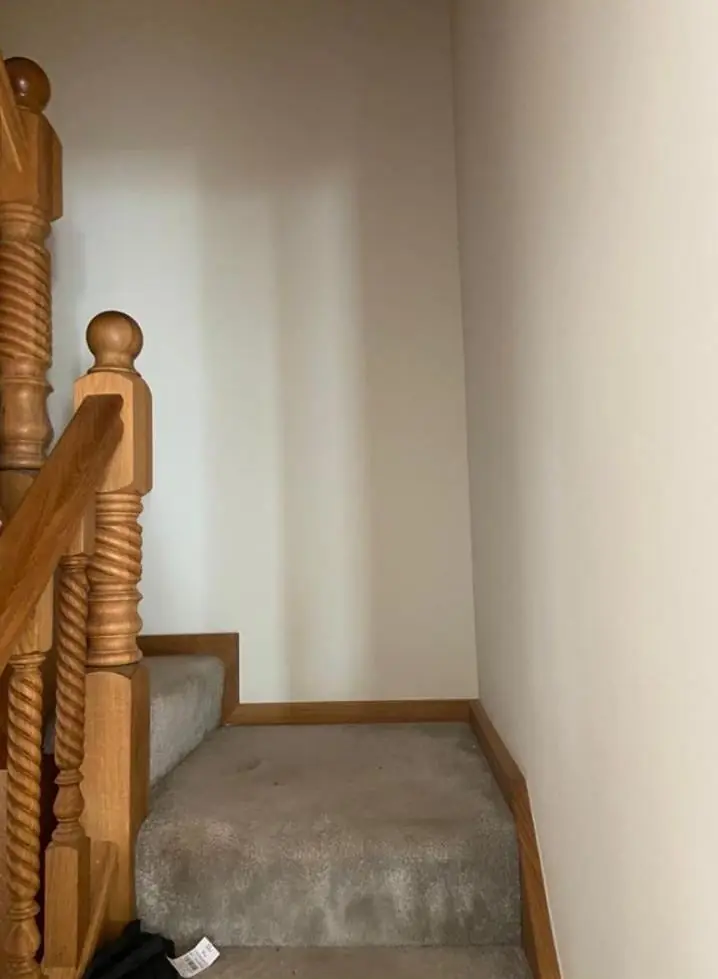
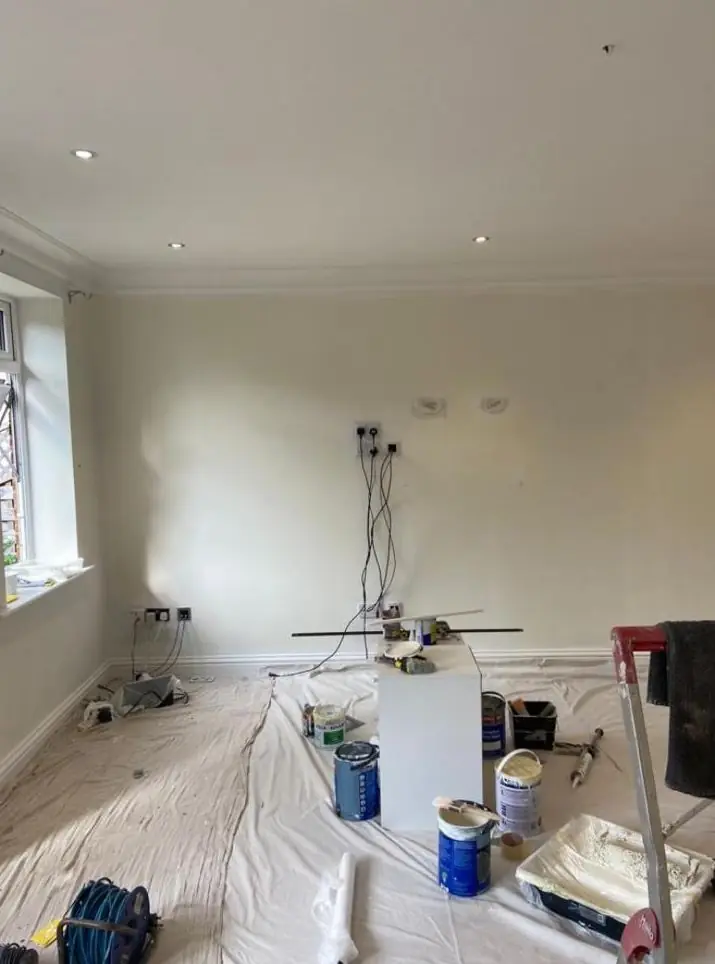
The newer houses bring the opposite job. Fresh gypsum plaster has to be mist-coated with a thinned emulsion before any finish coat, or the paint can peel away from the surface. Our mist coat guide explains why. New homes also settle over their first year or two, so fine cracks at ceiling joints and around door linings are common and are filled at the first full redecoration rather than painted over.
A barn conversion adds tall, open rooms, exposed timber and large glazed openings. Walls rising well above normal ceiling height are reached from a tower, and the timber is either masked or finished separately in a clear or tinted coating. In the bigger kitchens and family rooms of the new houses, a durable washable matt on walls with eggshell or satin on woodwork is usually the practical choice.
Getting a van into the village
The parish’s own plan records that Gayton’s lanes were never meant for today’s traffic, and that cars parked on the street have churned up the verges. On an interior job that matters, because sheets, steps, a tower and tins are carried in and out several times a day. A drive or an off-road space makes those trips easier, so mention one when you get in touch. It saves blocking a narrow lane and keeps the verge intact. Our Gayton area page has more on the village as a whole.
Last updated by Dean, DH Painter & Decorator.